
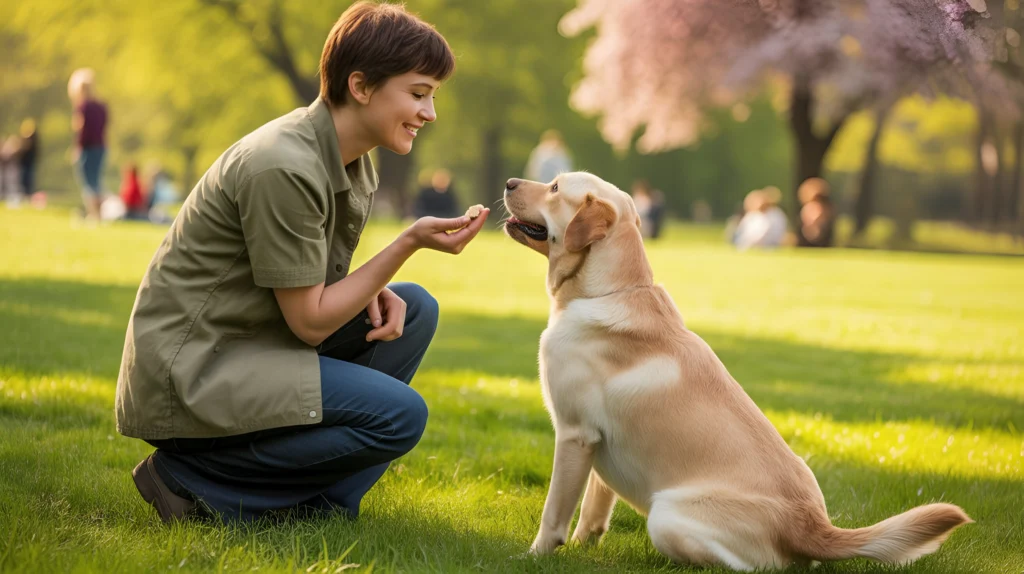
If you’ve ever watched a dog tilt its head and try to figure out what you want next, you know the magic of teaching. Over the years working as a trainer and living with two Labs, I’ve learned that the best tricks are the ones that build trust and make both of you grin. This article walks you through practical tricks to teach your dog — written the way I talk to clients: plain, warm, and full of things that actually work. We’ll cover everything from easy tricks to teach your dog to advanced sequences, tackle stubbornness, and show real-world examples of what I do in lessons.
When I first taught my lab this command, I made more mistakes than successes — and that’s okay. Training is messy and wonderful. Read this with a cup of coffee, keep some tiny treats handy, and expect to laugh at mistakes. This isn’t a strict manual; it’s a friendly roadmap you can follow, adjust, and make your own.
What Tricks to Teach Your Dog Really Means
When people search for “tricks to teach your dog” they often mean more than party tricks. Tricks are mental puzzles, little choices your dog makes to get praised or a treat. When I say tricks to teach your dog, I’m talking about behaviors like sit, shake, spin, and more elaborate moves like weaving through legs or closing a door — practiced in short, joyful sessions until the dog offers the behavior happily.
Tricks to teach your dog are also a language-building exercise. Every trick trains impulse control, attention, and the habit of wanting to work with you. They aren’t just cute — they’re functional. Teaching tricks to teach your dog builds focus for dogs who are easily distracted, gives nervous dogs a job that calms them, and gives seniors meaningful tasks that keep their brains sharp. In short: when I recommend tricks to teach your dog, I’m recommending a powerful tool for behavior, fitness, and friendship.
Why This Command Matters for Every Dog Owner
Let me be blunt: teaching tricks to teach your dog matters because life gets safer and simpler when your dog listens. A dog that knows “leave it” and “come” learned those as tricks at heart — they’re choices that become habits. Tricks strengthen the handler-dog relationship because each success is shared joy. Practicing tricks to teach your dog gives owners something positive to do on rainy days; it channels energy into cooperation instead of destruction.
I tell new clients that the best tricks to teach your dog are the ones that make daily life easier: sit at the door, wait at mealtimes, or give a paw before jumping. These small wins translate into safer walks, calmer guests, and fewer ruined slippers. And honestly, the pride you feel when your mutt nails a new trick? That matters, too.
Step-by-Step Guide to Applying the “Tricks to Teach Your Dog” Approach
Short sessions, high rates of reward, and patience are the meat and potatoes here. Below is a step-by-step routine I use with most dogs, followed by detailed instructions for specific tricks: from basic dog tricks like sit and stay to cool tricks to teach your dog like spin and play dead.
Daily training routine I swear by:
- Keep sessions to 3–7 minutes for beginners. Dogs learn in tiny bursts.
- Work 2–4 times daily. Short repetition beats one long, frustrated hour.
- Use high-value rewards early — tiny pieces of cheese, turkey, or the dog’s favorite kibble in the early stages.
- Mark behaviors precisely. Use a clicker or a sharp word like “Yes!” to mark the exact moment of success.
- Fade food to praise over time so the dog learns to work for attention and the cue itself.
When I teach tricks to teach your dog, I always start with attention exercises — make eye contact, then mark and reward. If your dog can’t look at you for a second, you’ll struggle to build bigger behaviors.
Basic routine that frames every training session
- Warm-up: 30–60 seconds of simple, guaranteed behaviors (look, sit twice).
- Drill: 3–5 minutes focusing on one target trick to teach your dog.
- Cool-down: A successful closure — a quick play burst or a calm settle.
Keep a treat pouch accessible, a clicker on hand (if you use one), and a mindset that accepts slow progress. The dog is always reading you more than your words.
Easy Tricks to Teach Your Dog — Step-by-step (Beginner Friendly)
These are the basic dog tricks every owner should try first. They build foundations: impulse control, targeting, and clear cues.
1. Sit
- Lure: Hold a tiny treat near the dog’s nose, then slowly move it up and back over the head. The dog will naturally sit. Say “sit” the moment the rear touches the floor, mark, and reward.
- Practice: Repeat in short bursts. Add a hand signal, then phase out the lure.
Why it works: It’s predictable and the movement naturally encourages the correct body mechanics. Teaching sit is one of the most rewarding tricks to teach your dog because it’s fast and useful in everyday life.
2. Down
- Lure: From a sit, lower the treat between the dog’s paws and along the ground. Use “down” as the dog settles, mark, deliver reward.
- Tip: Some dogs resist going to the floor. Use a tempting reward or train on a soft mat to make it more inviting.
Down is a slightly more advanced basic but one of the most calming tricks to teach your dog.
3. Come (Recall)
- Start close, with a high-value treat. Crouch, make it cheerful, say the dog’s name and “come,” then reward exuberantly.
- Turbo tip: Don’t call to punish. Make coming to you the best thing that ever happened to your dog.
A solid recall is the most life-saving trick to teach your dog you can invest in.
4. Shake / Paw
- Offer a treat, say “shake,” lift your hand, and when the dog paws you, mark and reward. If unsure, gently tap the dog’s paw with your fingers to prompt it.
- Variation: Teach “high five” by raising your hand higher for the dog to touch.
This is one of the easiest and most social tricks to teach your dog — guests love it, and it’s great for kids to practice gentle handling.
5. Wait / Stay
- Hold an open palm as a stop signal, say “wait,” then step back one second, return, mark, and reward.
- Build duration slowly; release with a consistent word like “okay” or “break” to teach patience.
Wait is a basic trick to teach your dog that enforces impulse control at doorways and during exciting moments.
Cool Tricks to Teach Your Dog — Showy, Fun, and Teach Communication
Once a dog has the basics, these tricks to teach your dog turn heads and expand problem-solving skills.
6. Spin / Twirl
- Lure a circle with a treat; say “spin,” mark the full rotation, reward.
- Add verbal cue then fade the lure. For freestyle, try both directions.
Spin is a quick confidence-builder and a crowd-pleaser among cool tricks to teach your dog.
7. Play Dead
- With the dog in a down, move the reward slowly to the side to encourage rolling. Add the phrase “bang” or “play dead,” mark the position, reward.
- Break it into parts: down → roll → rest on the side and then chain the segments.
Owners love this as a theatrical trick to teach your dog, and it’s also a great exercise in sequencing.
8. Weave Between Legs
- Start with the dog on your left, lure through your legs, reward, and repeat.
- Add a consistent foot cue and rhythm. Gradually increase speed and fluidity.
Weaving is a sporty trick to teach your dog that builds coordination and handler-dog teamwork.
9. Targeting (Touch)
- Hold your palm near the dog’s nose. When they touch it, mark and reward. Use the target to guide the dog into positions for other tricks.
- Targeting is a foundational trick to teach your dog for advanced shaping later.
10. Take a Bow
- Encourage the dog to lower its front while leaving rear up — lure the nose down and back; say “take a bow,” mark the stretch, reward.
A lovely, polite trick to teach your dog that’s great for photos and performances.
How to Teach Your Dog Tricks — Problem-Solving for Common Roadblocks
Sometimes dogs stall. Here are troubleshooting steps I use with clients when tricks to teach your dog aren’t clicking.
- Problem: Dog lacks motivation. Solution: Rotate rewards. Use special treats or a favorite toy; train right after a walk when the dog is calmer and more focused.
- Problem: Cue confusion. Solution: Back up to the last step the dog understood and retrain more slowly with clearer markers.
- Problem: Distractions. Solution: Move to a quieter room. Practice with patience and slowly reintroduce distractions at lower intensity.
- Problem: The dog freezes or becomes fearful. Solution: Lower expectations, reduce pressure, and use desensitization — pair training with something the dog already loves.
Remember: when training tricks to teach your dog, success is measured in tiny increments. Regressing two steps is fine — it makes the dog confident.
Motivation Tips for Stubborn Dogs
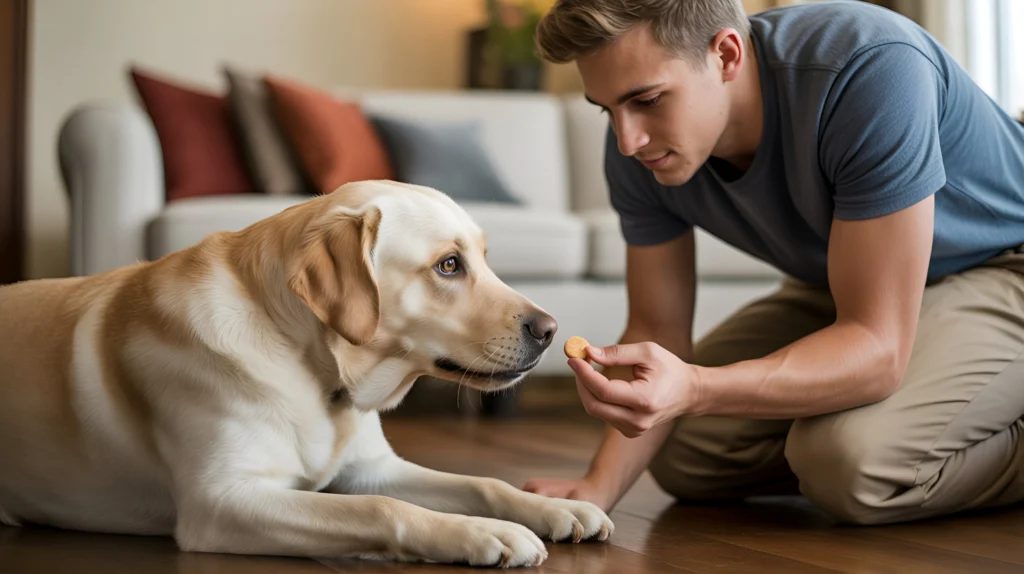
Stubborn sometimes means smart, not obstinate. Here’s how I motivate the stubborn ones without turning training into bribes.
- Increase value: Dogs often respond to novelty. If kibble fails, try shredded chicken, cheese, or a squeaky toy for a game break.
- Keep sessions joyful: If you sound bored, your dog will too. Use exuberant praise, throw in a play break, or do a few simple, guaranteed wins to keep confidence high.
- Use intermittent rewards: Once a trick is solid, reward every few times randomly — dogs love variable schedules and will keep trying for the unpredictable jackpot.
- Change the routine: Some dogs respond better to shaping (rewarding successive approximations) than luring. I use shaping a lot for clever hounds.
- Respect personality: A stubborn Husky might not care about endless sit drills — find tricks that fit their instincts, like spinning, jumping through a hoop, or scent games.
When you ask me for tricks to teach your dog and your pup is stubborn, I usually suggest switching to shorter sessions and higher-value rewards — that often flips the switch.
Advanced Challenges for Experienced Owners
If you’ve got the basics down and you and your dog are hungry for complexity, try these challenges. They test communication, sequencing, and physical control.
- Trick Chains
- Chain three to five behaviors in sequence (e.g., spin → bow → shake → back up) and reward the whole chain. This builds memory and flow.
- Chain three to five behaviors in sequence (e.g., spin → bow → shake → back up) and reward the whole chain. This builds memory and flow.
- Distance and Duration
- Train tricks at increasing distances and longer durations. Practice sit and stay while walking away or hiding behind furniture.
- Train tricks at increasing distances and longer durations. Practice sit and stay while walking away or hiding behind furniture.
- Multi-step Props
- Introduce props like cones, hoops, or a low platform. Teach the dog to fetch a named toy and place it in a basket — excellent for mental workouts.
- Introduce props like cones, hoops, or a low platform. Teach the dog to fetch a named toy and place it in a basket — excellent for mental workouts.
- Distraction Training
- Gradually add noise, other dogs, or movement. If you can get the trick at a busy park, you’ve earned the medal.
- Gradually add noise, other dogs, or movement. If you can get the trick at a busy park, you’ve earned the medal.
- Performance Routines
- Put together a short routine to music for fun or competitions. Timing and rhythm matter — practice transitions cleanly.
- Put together a short routine to music for fun or competitions. Timing and rhythm matter — practice transitions cleanly.
These advanced tricks to teach your dog are deeply satisfying because they require both creativity and precision from handler and dog.
Common Mistakes and How to Fix Them
Even seasoned owners make the same predictable errors. I’ve coached hundreds through these fixes.
Mistake 1: Repeating the cue too long
- Fix: Give a single clear cue, wait three seconds. If no response, remove the cue and make the dog think again — repetition without result breeds bad habits.
Mistake 2: Rewarding the wrong behavior
- Fix: Mark the precise moment of success. If you accidentally reward the wrong thing, stop and reset the step.
Mistake 3: Moving too fast
- Fix: Break the behavior into smaller steps and celebrate micro-progress.
Mistake 4: Over-using food without fading
- Fix: Gradually replace every treat with praise or petting, or use a variable schedule for food rewards.
Mistake 5: Expecting perfection in new environments
- Fix: Train in low-distraction settings first, then generalize gradually.
If you keep making these mistakes when trying tricks to teach your dog, your dog will learn to guess what you want rather than reliably respond. Slow, precise training wins every time.
Emotional Benefits and Communication
Training is not just a list of commands — it’s a conversation. When you spend time teaching tricks to teach your dog, you’re building a shared language. The clearer your signals, the less anxious and more confident your dog becomes.
Here’s what I see over and over: dogs who get regular trick sessions are calmer, sleep better, and are more attentive off-leash. For anxious dogs, tricks can be a safe space — a predictable routine that reduces worry. For hyper dogs, mental work tires them out faster than a long walk.
Don’t underestimate the emotional benefits: training time is an investment in empathy. I often tell owners, “Your dog is trying to read your face; teach them to read your hands, voice, and rhythm.”
A Trainer’s Toolbox — Gear That Helps
You don’t need fancy equipment, but these items make many tricks to teach your dog easier:
- Clicker (or a consistent marker word)
- Treat pouch and tiny, soft treats
- Target stick (for targeting and precision)
- Low platform or mat
- Lightweight hoops or cones
- Long line for safe distance training
These tools don’t do the work for you, but they make shaping and rewarding efficient and clean.
Training Programs and How to Structure Progress
Here’s a weekly micro-plan I’ve used for new dog owners trying to build a handful of basic dog tricks. Adapt it to your schedule and attention span.
Week 1: Focus on foundations
- Sessions: 4 short sessions per day (3–5 minutes)
- Goals: Eye contact, sit, and coming when called
Week 2: Build duration and add targeting
- Sessions: 3–4 sessions per day
- Goals: Hold sit, first “down,” and touch target
Week 3: Introduce cool tricks
- Sessions: 3 sessions per day
- Goals: Spin, shake, and wait at the door
Week 4: Start chaining and add distractions
- Sessions: 2–3 sessions per day
- Goals: Two-trick chains, longer recalls, and practice in new rooms/outdoors
This plan shows how the tricks to teach your dog can be layered — each week you add complexity while keeping joy front and center.
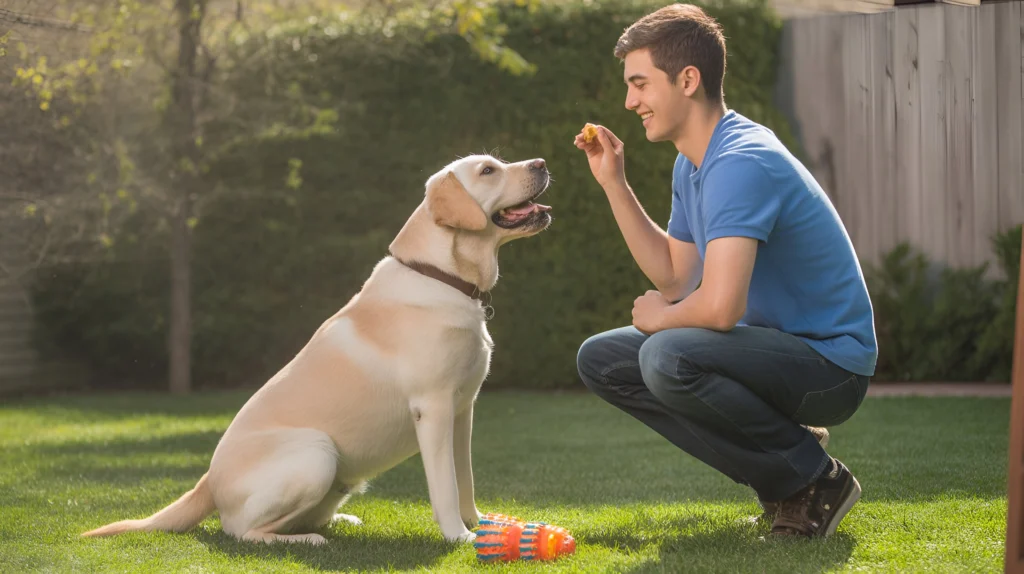
Special Cases: Training Puppies, Seniors, and Dogs with Physical Limits
Puppies
- Puppies have short windows of attention and are learning the world. Keep everything playful, never overtrain, and prioritize potty, socialization, and gentle starter tricks like touch and sit.
Seniors
- Use tricks to teach your dog that don’t strain joints — targeting, paw rests, slow low bows, and scent work keep their minds active without pain.
Dogs with Physical Limits
- Modify. Teach a wheelchair dog to “touch” a target, a blind dog to explore on leash with scent markers, and a dog with arthritis to do seated tricks or hand-targeting.
Every dog can benefit from tricks to teach your dog — you just tweak expectations and approaches.
Safety Notes and Welfare Considerations
- Avoid forcing joints into unnatural positions.
- Never hold treats in a way that strains the dog’s neck.
- Take breaks and look for signs of stress: yawning, lip licking, or trying to avoid you.
- Keep sessions short and end on a happy note.
Safety is training’s invisible backbone. If a trick would risk pain, skip it or adapt it.
FAQ — Real Questions from Real Owners
Q1: How long will it take to teach a trick?
A1: It depends on the dog and the trick; some dogs learn simple tricks in a few minutes, while complex chains take weeks. Expect steady progress with short daily practice.
Q2: My dog forgets the trick when guests come over — why?
A2: Distraction and excitement can erode performance. Practice the trick in gradually more distracting settings and use higher-value rewards when guests arrive.
Q3: Can I teach tricks to teach my dog without treats?
A3: Yes — but start with treats and fade to praise, play, or life rewards. Many dogs transition to toy- or praise-driven work if trained thoughtfully.
Q4: My dog gets bored — how do I keep it interesting?
A4: Rotate tricks, introduce new rewards, keep sessions short, and mix in play. Use variable rewards to keep engagement fresh.
Q5: Are tricks useful for reactive dogs?
A5: They can be — but proceed carefully. Use tricks as a focus/interrupt tool and pair training with desensitization work. Work with a professional if your dog shows aggressive or fearful responses.
Q6: What’s the difference between tricks and obedience?
A6: Tricks are often creative behaviors and games; obedience focuses on safety and control. Both overlap; good obedience makes trick work easier.
Final Thoughts / Key Takeaways
Teaching tricks to teach your dog is one of the kindest, most productive things you can do for your dog’s brain and your bond. Start small, be patient, and celebrate tiny wins. If you’re worried about being “too boring” or “not skilled enough,” remember: dogs care about your attention and heart more than perfection. I still celebrate when my old lab learns a new twist or when a nervous rescue offers a paw for the first time.
Go find three tricks to teach your dog today — maybe sit, touch, and a silly spin — and spend ten minutes on each. You’ll come away with a calmer dog and a better conversation between you two. Now go have fun with it.
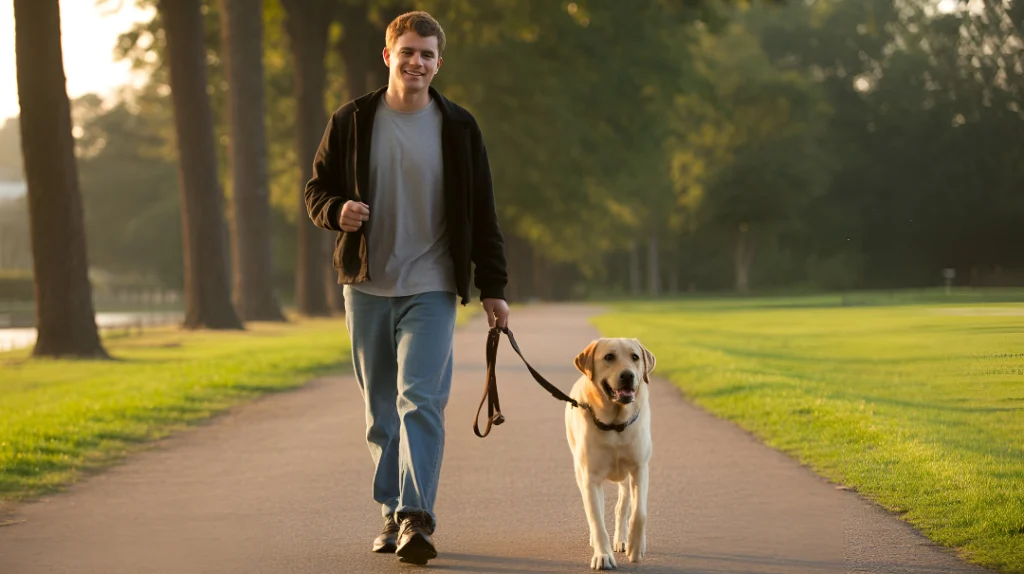
Extended Practical Examples and Trainer Stories
I want to give you real, practical scenes — the kind I tell owners in the middle of a training session when someone needs encouragement. Picture this: a young family brings in a nervous terrier who darts around the room like a popcorn kernel. We start with one tiny trick to teach your dog: touch. The puppy touches my palm out of curiosity; I mark and we suddenly have a language starter. Five minutes later, the puppy sits for the first time in a human crowd and the parents cry a little. That touch trick grew into a calm sit near visitors and then into a “place” behavior for the front door.
Story 1 — The Apartment Dog Who Learned Patience
Case: A rescue beagle named Rosie who barked at every elevator ding.
Approach: We taught Rosie one of the quiet, practical tricks to teach your dog — a “place” command using a door mat. Step 1: Mat targeting. Step 2: Add “place” cue; reward for calm. Step 3: Practice with recorded elevator sounds at a whisper then slowly louder. Result: Rosie learned to go to her mat and settle. The family stopped apologizing for Rosie and began bringing treats to visitors to run quick mat drills; it reduced stress for everyone.
Story 2 — The Agility-Minded Lab
Case: A lab named Jax who loved to bolt but thrived on activity.
Approach: Use tricks to teach your dog that channeled his motor drive: weave, spin, and a reliable recall scored by a ball. Add a trick chain (spin → retrieve a toy → drop in a basket) and Jax became obsessed with the game. The owner’s walks shifted from frantic to playful and cooperative.
Story 3 — The Senior Spaniel
Case: A 12-year-old spaniel with sore hips.
Approach: Use low-impact tricks to teach your dog — targeting, hand touches, and short scent games on the floor. These kept the dog mentally sharp without stressing joints, and the owner reported calmer evenings and improved appetite.
Deep Dive: Clicker vs. Marker Word for Tricks to Teach Your Dog
Both are effective tools for timing. Clickers give a precise sound that marks the exact millisecond of success, which is helpful when shaping a new behavior. A marker word like “Yes!” or “Good!” can be just as effective if your timing is consistent.
- How I introduce the clicker: I pair it with treats for a few sessions so the dog knows the click predicts a reward. Then I use it extensively during shaping for tricky behaviors like “back up” or “weave.” When dogs understand the click, they learn behaviors faster — which makes our “tricks to teach your dog” sessions more efficient.
- When I stick with a marker word: I use it for public classes or when coaching owners who won’t carry a clicker. It’s practical and less likely to be lost than a tiny plastic clicker.
Shaping and Luring: Two Paths to the Same Goal
Luring uses food to guide; shaping rewards small steps toward a final behavior. Both are staples when deciding which tricks to teach your dog.
- Luring example (sit): Hold treat above nose, lift, dog sits — mark and treat.
- Shaping example (roll over): Reward any roll-like motion at first; reward more complete rotations over time.
I often mix both: lure for initial clarity, then shift to shaping for refinement. You’ll find tricks to teach your dog become more reliable when both methods are combined thoughtfully.
A Table of Tricks by Difficulty and Practicality
Below is a quick reference I give to clients when they ask which tricks to teach their dog first based on temperament and life needs.
| Level | Good For | Sample Tricks |
| Beginner | Puppies, elderly, anxious dogs | Sit, Down, Touch, Shake, Come |
| Everyday Practical | Families, apartment dwellers | Wait, Place, Loose-leash walk, Drop it |
| Fun & Showy | Energetic dogs, performers | Spin, Play dead, High five, Weave |
| Advanced | Competitive sports, advanced training | Trick chains, Retrieve named items, Distance stays |
This classification helps owners choose which tricks to teach your dog first, depending on their goals and the dog’s energy level.
How to Track Progress — A Trainer’s Log
I encourage owners to use a training log. It’s simple and satisfying. Here’s a template I hand out in class:
Training Log (5-minute entries)
- Date / Time:
- Trick focused on:
- Steps practiced (e.g., lure → add cue → increase distance):
- What worked:
- What regressed:
- Distractions present:
- Next session goal:
Keeping this log lets you see week-to-week progress and notice when a regression might be a momentary blip rather than failure. When deciding which tricks to teach your dog next, the log points you to natural progressions.
Reward Schedules — How to Fade Food Without Falling Off a Cliff
When a dog reliably offers a trick to teach your dog on cue, shift to a variable reward schedule. Here’s a progression that works:
- Continuous: Reward every successful repetition (early learning).
- Fixed ratio: Reward every 2nd or 3rd success.
- Variable ratio: Reward randomly — sometimes the first, sometimes the fifth — but keep the value high intermittently.
- Transition to life rewards: Use play, praise, or access to a favored activity (like going through a door or getting the ball) as rewards.
This keeps the dog engaged and prevents over-dependence on treats while preserving enthusiasm for tricks to teach your dog.
Food and Treat Guidance (what I actually feed during sessions)
- Small, soft treats that you can swallow fast: tiny bits of cheese, hot dog, cooked chicken.
- Kibble sometimes is fine if the dog is food-driven, but switch to soft, high-value treats for high-distraction environments.
- Always monitor calories — treats add up. Replace meals with training treats occasionally and consult your vet for calorie guidance.
Treats are a tool — not the relationship. When you train tricks to teach your dog responsibly, you balance nutrition with progress.
Environmental Generalization — Taking Tricks Out into the World
A trick learned in the kitchen may not work at the dog park — that’s normal. Generalization means teaching the trick in many places, with many distractions. Here’s a staged approach using the example trick of “sit” as a model for all other tricks to teach your dog:
- Quiet room (home) with no distractions.
- Different room in the house.
- Backyard or quiet park area.
- Busy park with other dogs and people.
- Home with active visitors and sounds.
At each step, if the dog regresses, drop back to the previous stage until reliable, then try again. This is how tricks to teach your dog turn into dependable behaviors across contexts.
Using Tricks for Behavior Modification
Tricks can be part of a behavior plan. For example, instead of scolding a dog for counter-surfing, teach “leave it” and “place” as alternative behaviors. If separation anxiety is present, teach short, locally focused games that calm the dog and slowly lengthen alone time. Tricks to teach your dog aren’t a replacement for formal behavior modification, but they are a flexible, humane tool to encourage better choices.
Working with Children on Tricks
Kids love training. It’s a beautiful way for families to bond with a dog. Safety first: always supervise. Teach children to be calm, deliver rewards gently, and not to repeat cues unless practicing with supervision. Simple tricks like “shake” or “touch” are great starter exercises to build a child’s sense of responsibility and a dog’s patience.
Daily Routine Sample: 15–20 Minute Practical Plan
This short daily plan keeps training consistent without overwhelming anyone.
Morning (5 minutes)
- Quick eye-contact game and 5 sits during breakfast prep.
Afternoon (5–7 minutes)
- Two short sessions focused on one trick (e.g., spin practice and target touches).
Evening (5–8 minutes)
- Practice recall and a fun trick chain, end with play and praise.
Consistency with tiny sessions prevents burnout and makes tricks to teach your dog a part of life, not a chore.
More Cool Tricks to Teach Your Dog (with quick how-tos)
- Push a Door: Teach the dog to nudge a door with its nose to open it slightly or push a ball through a doorstop. Use a target and reward on approach.
- Fetch Specific Items: Teach names of toys one at a time, reward retrieval and placement in a basket.
- Crawl: Lure the dog to lower and ‘snake’ forward. Reward small forward movements.
- Spin Both Ways: Teach a direction with a hand signal and a separate cue for the opposite direction.
- Back Up: Teach the dog to step backward on cue by encouraging them with your body or target and rewarding successive backward steps.
Each of these tricks to teach your dog offers a slightly different learning curve but expands their problem-solving skills.
Handling Plateaus
Sometimes progress stalls — a plateau. I tell owners to change one variable: reward value, session length, environment, or method (lure vs. shape). Often a tiny tweak gets dogs unstuck. Remember that plateaus are normal; they often mean the dog is consolidating learning.
How to Teach Tricks to Your Dog When You Have Limited Mobility
You don’t need to be a gymnast to train. Seated training, using hand targets, or teaching voice-only cues are fully valid. Use a long line to add safe distance and auditory cues for distance work. Routines and consistency matter more than mobility — pick tricks to teach your dog that suit your strengths and your dog’s capabilities.
Legal and Ethical Notes — A Trainer’s Responsibility
Never use force or corrections that cause fear. Tricks are gifts — not punishments. If a dog shows fear, stop and find smaller, positive steps. If aggressive tendencies appear, consult a qualified behaviorist. Tricks to teach your dog should always be ethical, safe, and mindful of the dog’s well-being.
Advanced Idea: Teaching Names of People and Toys
Teaching a dog to fetch a named item or find a named person is advanced but possible. Start with two items, give each a distinct name, and only reward upon correct retrieval. Gradually add items and increase distance. Naming people involves pairing their name with sight, smell, and then movement — a slow but rewarding process. These tricks to teach your dog are impressive and gave some of my clients real independence with assistance dogs.
Troubleshooting Matrix (Quick Read)
- Problem: Dog won’t approach your hand. Fix: Offer a toy or food; do a few play sessions; make hand positive.
- Problem: Dog offers a different behavior when cued. Fix: Re-clarify the cue, practice with a clear marker, and reward only the desired behavior.
- Problem: Trick works at home but not outside. Fix: Move one step closer to outside training; increase reward value outside.
Closing Trainer Note — Compassion Is The Tool
If there’s one lesson I wish every dog owner knew: your patience, body language, and steady temperament are the most powerful tools you have. When you adopt tricks to teach your dog as a long-term way to connect, you’re offering structure and predictability — two things dogs crave. Celebrate small wins, and if you ever feel stuck, reach out to a trainer and bring cookies; trainers love cookies and dogs, in that order.
Extra FAQ Additions
Q7: How do I stop cue-dumping (saying the cue repeatedly)?
A7: Give the cue once and wait a few seconds. If the dog doesn’t respond, remove the cue and restart at a simpler step. Patience and clear timing beat repetition.
Q8: Can I train multiple dogs at once?
A8: Yes, but train them separately for new tricks until each dog understands the basics; then layer in group work to practice self-control.
Q9: What’s a quick test to know a trick is solid?
A9: If your dog performs the trick reliably in a new room with low-level distractions, it’s probably solid enough to generalize further.
Final Trainer Checklist Before You Start
- Keep sessions short and joyful.
- Reward precisely and fade food gradually.
- Track progress and celebrate tiny steps.
- Always be kind and adjust for the dog’s needs.
- Pick three manageable tricks to focus on this week.
Thanks for taking this long read. I wrote this like I teach: step-by-step, with real stories, and a good dose of humor. Go try one of those tricks to teach your dog this afternoon; take notes, laugh at the mistakes, and enjoy the process — your dog already loves you for trying.
Mini Masterclass: A 30-Minute Training Script You Can Do Today
This is a single 30-minute plan that busy owners can use to finish a meaningful training sprint. I call it a mini masterclass because it mixes a warm-up, focused practice on a single trick to teach your dog, and a play reward finale. Do this once or twice a week and you’ll be stunned how quickly things progress.
Warm-up (5 minutes)
- Build focus: Ask for five eye contacts, three quick sits, and a short recall from one step away. Use low-value treats to warm brains without burning motivation.
- Why this helps: A short ritual primes the dog for a more demanding trick to teach your dog session by establishing focus and predictability.
Core Work (20 minutes)
- Choose one trick to teach your dog — not three. My suggestion: rotate between one practical trick and one fun trick each session.
- Break it down into steps and do short repetitions:
- Step A: Show the desired movement (lure/shaping) and reward any approximation.
- Step B: Introduce the verbal cue and mark the moment of success.
- Step C: Add a small delay or distance once the dog understands the cue.
- Step D: Repeat five times, then switch to a different angle or environment to generalize.
- Step A: Show the desired movement (lure/shaping) and reward any approximation.
- Practical tip: If the dog stalls, switch to a simpler behavior for a couple of quick wins before returning to your main trick to teach your dog.
Play and Cool-Down (5 minutes)
- End with two minutes of free play or a favorite tug toy, then a calm down where the dog lies on a mat and receives quiet praise.
- This confirms to the dog that training is fun and ends on a high note.
Weekly Review (10 minutes, optional)
- Pull out your training log and write down one thing that improved and one next-step goal for the trick to teach your dog. Small, intentional notes lead to big improvements over time.
Micro-Progressions: Tiny Steps to Big Results
For tricky behaviors, think of training as math: many small steps equal a larger skill. If you’re teaching “play dead,” for instance, break it into: down → roll → stay on side → relax. For each of those tiny steps, you might train across several short sessions. When you string them together, you’ve taught a complex trick to teach your dog without ever overwhelming the animal or yourself.
A Short Buyer’s Guide: What to Expect from Private Lessons
If you sign up for a one-on-one lesson with a trainer, here’s what you should expect and how to get the most from it:
- Expect the trainer to assess your dog’s temperament and baseline skills. They’ll ask which tricks to teach your dog and suggest a personalized plan.
- Be ready to show current challenges — videos are great if you’re remote. Good trainers will give homework and set realistic next steps.
- Follow-up: Implement exercises as directed and practice consistently. The best progress happens between sessions, not during them.
Healthy Pace: Avoiding Burnout for You and Your Dog
Training is a two-way relationship. When I see owners start too hard — long sessions, daily grind, stuck expectations — both owner and dog lose joy. Choose three manageable tricks to teach your dog over a month and celebrate each small success. That way, training becomes something you look forward to instead of dread.
More Owner-Proven Tricks (client favorites)
- “Put Away” — Teach your dog to put toys in a basket using target training and shape the placement behavior. This is a trick to teach your dog that’s helpful for tidy homes.
- “Close the Door” — Teach a paw or nose touch to the door edge and reward successive pushes until the door shuts. It’s practical and impressive.
- “Ring a Bell” — Useful for alerting you to go outside or signaling a wanted activity. Pair the ring with the desired action and reward reliably until the association forms.
These tricks to teach your dog often translate directly into daily convenience and more independence for your pet.
Games That Reinforce Tricks (and avoid boredom)
- Hide and Seek: Use a recall cue and hide in the house or yard. Reward big when the dog finds you.
- Scent Trails: Lay a short scent trail to a hidden toy to build confidence and odor work skills.
- Trick Relay: Set 3 stations around the yard with a different trick at each one — spin, sit, touch — and move dog between stations for a playful training circuit.
Games turn tricks to teach your dog into enjoyable habits rather than chores.
How to Teach Your Dog Tricks While Working From Home
If you’re remote and at the desk all day, sprinkle training into your schedule. A five-minute spin-and-stretch break for your dog (and you) every hour keeps energy manageable. Teach a quiet “settle” trick for times when the dog needs to be calm during calls. These small practices improve focus for both parties and reduce interruptions during a busy workday.
On Using (and Not Using) Verbal Praise
Verbal praise is powerful, but it must be genuine. Dogs can tell when praise is perfunctory. Use a high, enthusiastic “Yes!” for a new achievement, and a warm, calm “Good dog” for maintenance. Pair words with touch when appropriate. That combination helps maintain progress in the long run and makes tricks to teach your dog emotionally satisfying for both of you.
When to Call a Professional
Call a certified trainer or behaviorist if:
- The dog shows signs of fearful or aggressive behavior during training.
- You’re not seeing any progress after consistent, varied approaches.
- You want performance-level tricks or competition preparation.
A professional can set a clear path and ensure training techniques match the dog’s individual needs and welfare.
An Owner’s Reflection: Why I Keep Teaching
After decades of training, I still pick up new tricks because dogs change, life changes, and training keeps the relationship alive. Teaching tricks to teach your dog isn’t just about the dog performing for visitors — it’s about maintaining an ongoing, meaningful partnership where both parties feel heard. The dog learns structure and rhythm; the owner learns patience and clarity.
Practical Checklist — First-Time Trick Plan (One-page)
- Choose one practical trick and one fun trick this week.
- Put treats in a spot you can access quickly.
- Train for three 5-minute sessions per day.
- Write one sentence in your training log after each session.
- End every session with play and praise.
Following this checklist simplifies decision-making and makes consistent practice achievable, which is what actually gets results when teaching tricks to teach your dog.
My Final Phrase to You
If you try only one thing after reading this long article, try teaching your dog a “touch” target and then a “sit.” From there, you can build so many tricks to teach your dog — it’s the doorway habit that opens up a world of communication. Be kind, keep sessions short, and laugh more than you scold. Your dog sees your intention more than your technique, and that’s what makes these tricks truly meaningful.