
Introduction: Your Puppy’s First Little Home
When I first brought home Max, my rambunctious Labrador puppy, I had no idea how to crate train a puppy properly. I remember staring at that metal crate like it was some kind of spaceship — confusing, intimidating, and a little scary. Max? He thought it was a trap. “Trust me, buddy… we’re going to figure this out together,” I whispered.
Over the years, I’ve guided dozens of clients through this same anxious first week. Some puppies immediately love their crate — it’s like a tiny castle they claim for themselves. Others? Well… they make it clear that crates are the enemy. But here’s the secret I’ve learned: how to crate train a puppy isn’t about confinement — it’s about creating a safe, comforting space that your puppy chooses to enter.
I still remember Max’s first solo nap in his crate. He stretched, yawned, and looked at me like, “Really? This is all mine?” That moment was magical — and it’s what crate training is really about: trust, comfort, and a little patience.
What “How to Crate Train a Puppy” Really Means
At its core, crate training isn’t about forcing your puppy into a cage. It’s teaching your puppy that this space is their den, their retreat, their home within your home. It’s where they can rest, feel safe, and reset when life gets overwhelming.
Think of it as the puppy’s “quiet corner” — a place to decompress after a zoomie-filled morning or a hectic afternoon with guests. Puppies thrive on routines, and when they learn that the crate is a safe, predictable zone, they develop confidence and independence.
I’ve seen timid rescues curl up in their crates within minutes when given the right introduction — a soft blanket, a favorite toy, and, of course, patience. That’s the essence of how to crate train a puppy: patience, positive reinforcement, and emotional security.
Why Every Dog Owner Should Master This Skill
Crate training isn’t just a convenience. Here’s why it’s essential:
- Confidence and independence: Puppies learn to relax alone without stress.
- Safe space during chaos: Loud noises, guests, or kids? The crate is their sanctuary.
- Potty training made easier: Puppies avoid soiling their sleeping area.
- Travel and vet visits: Familiar crates reduce anxiety outside the home, according to the American Veterinary Medical Association.
I once worked with a client, Jenna, whose puppy Scout panicked every time someone rang the doorbell. After a few calm crate sessions, Scout would retreat into his cozy den, tail wagging, until the excitement passed. That’s real-world proof that how to crate train a puppy builds trust and emotional resilience.
Step-by-Step Guide: How to Crate Train a Puppy
Here’s my go-to method, the one I teach every client:
Step 1: Choose the Right Crate
Select a crate just large enough for your puppy to stand, turn, and lie down comfortably. Too big? They might treat one corner as a bathroom. Too small? Cramped and uncomfortable.
Pro Tip: Use a divider to adjust the space as your puppy grows — keeps it cozy and manageable.
Step 2: Make It Inviting
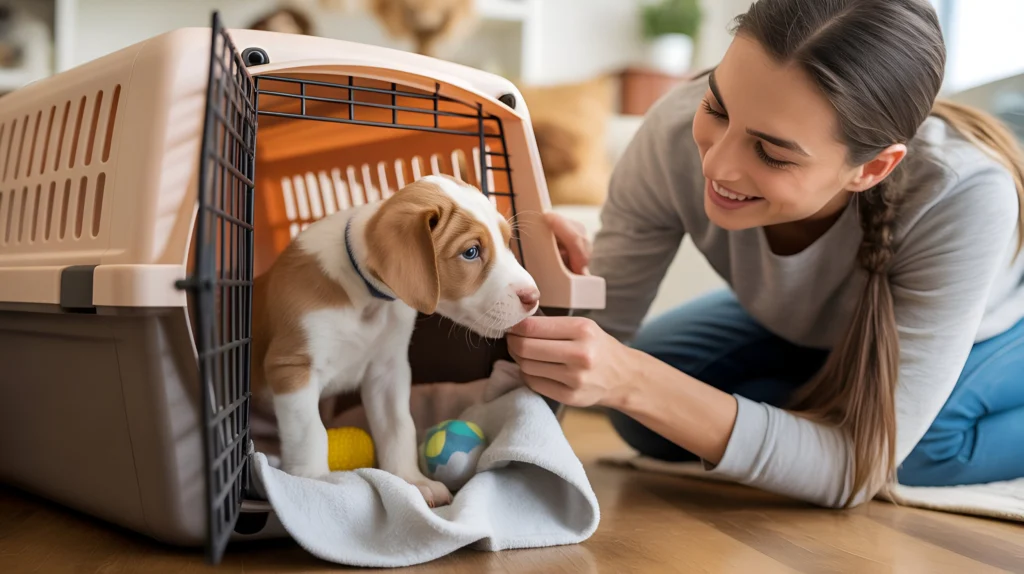
Add a soft blanket and toss in a favorite toy. Call your puppy over gently, letting them investigate. Treats can encourage exploration.
I like saying, “Come on, buddy — check out your new den!” Even the most cautious puppies often peek inside when you make it inviting.
Step 3: Start Small
Short sessions are better than long ones at first. Sit nearby, chat calmly, and let your puppy set the pace. Gradually extend the time inside as confidence grows.
Step 4: Reward Calm Behavior
Whenever your puppy rests quietly, offer a treat, a gentle pat, or a few soft words. This reinforces that being calm inside the crate is rewarding.
Step 5: Practice Short Departures
Step out for a minute or two, return calmly. Gradually increase the time you’re gone. Your puppy learns: “Mom/Dad always comes back.” Trust builds naturally.
Motivation Tips for Stubborn Puppies
Not every puppy loves the crate immediately. Some tips that work wonders:
- Micro Wins: Even a paw inside is progress — celebrate it!
- Rotate Rewards: Treats, toys, or verbal praise keep interest high.
- Short Sessions: Better five calm minutes than twenty stressful ones.
- Familiar Scents: Blankets or clothing with your scent help.
- Background Noise: Soft music or white noise can mask scary household sounds.
I once had a shy Border Collie named Max (another one!) who froze near the crate every time. With calm reassurance, treats, and short positive sessions, he eventually entered voluntarily. Moments like these are why how to crate train a puppy is more art than science.
Common Mistakes and How to Fix Them
| Mistake | Why It Happens | Fix |
| Using crate as punishment | Puppy associates it with fear | Keep it positive — a den, not a timeout |
| Leaving puppy too long | Bladder too small for age | Follow “puppy’s age in months +1 = max hours” rule |
| Ignoring whining | Puppy thinks it works | Wait for silence, reward calmness |
| Crate too big | Puppy soils area | Use a divider |
| Forcing entry | Puppy resists | Encourage with treats and praise |
Avoid these errors to make how to crate train a puppy stress-free and effective.
Emotional Benefits and Bonding
The crate builds more than obedience; it builds emotional security. Puppies who feel safe in their crate are calmer, more confident, and better able to handle the world.
Watching a nervous rescue curl up in a crate for the first time? Pure magic. You see confidence grow, trust deepen, and behaviors improve — all because the crate is a reliable sanctuary.
Key Takeaways from Section One
- Crate training = safety + positive reinforcement.
- Start small, reward calmness, gradually increase independence.
- Never use the crate for punishment.
- Watch emotional cues to ensure comfort.
- Patience and consistency always win.
Mastering these foundations sets your puppy up for success in potty training, travel, and lifelong confidence.
Deepening the Bond — Making Crate Training Work in Real Life
From Basics to Real-Life Magic
Once your puppy has mastered the first steps of crate training, the next challenge is weaving it into real-life routines. Knowing how to crate train a puppy in theory is one thing; making it a natural part of your day-to-day life is another.
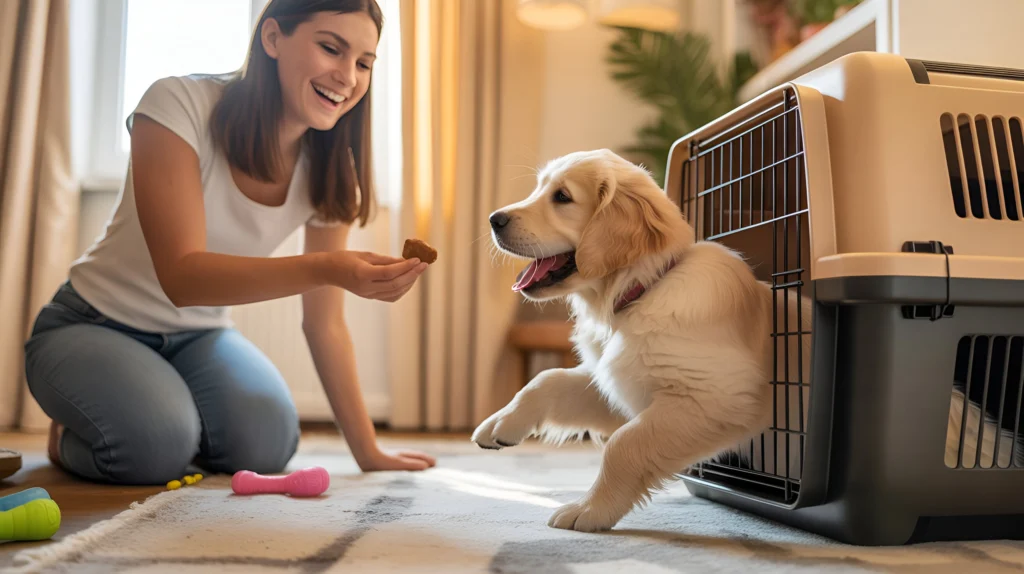
I remember Jenna and her golden retriever, Scout. At first, Scout treated his crate like it was a medieval dungeon. Every time Jenna tried to close the door, he gave her “the look” — you know the one — the big, puppy-eyed “I’m innocent, why are you doing this?” Moment of truth: she didn’t panic. We turned crate time into play, treats, and calm encouragement, and within two weeks, Scout would hop in on his own. That’s when crate training really starts to shine — when trust meets routine.
Making Crate Training Part of Daily Life
Morning Routine
- Start with a potty break and short playtime.
- Encourage calm crate time for breakfast.
- Use consistent, cheerful cues like “crate time!” or “bed” to reinforce habits.
Tip from experience: Puppies respond to tone more than words. Excited or rushed energy can make them anxious. Calm, steady praise works wonders.
Midday Sessions
- During chores or short errands, crate time ensures safety and prevents accidents.
- Introduce puzzle toys or safe chews to keep them occupied.
- Gradually extend the duration as your puppy grows more confident.
Evening Wind-Down
- After active play, the crate becomes a cozy retreat.
- Soft blankets, calm lighting, and gentle verbal praise help your puppy relax.
- Reinforce calm behavior: “Good job, buddy — safe and comfy.”
Crate Training for Potty Success
Many owners ask: “How do you crate train a puppy for potty training?”
Here’s the trick:
- Puppies instinctively avoid soiling their sleeping space.
- Time crate breaks around potty opportunities.
- Reward immediately after a successful potty — treats, praise, or both.
- Gradually extend crate periods as the puppy matures.
This method blends emotional comfort with behavioral science — a key principle in how to crate train a puppy.
Motivating Puppies Who Resist
Some pups take longer to warm up. Here’s what works in real homes:
- Short Positive Sessions: Start with minutes, not hours.
- High-Value Rewards: Treats, favorite toys, or enthusiastic praise keep motivation high.
- Familiar Scents: A blanket or piece of worn clothing helps with separation comfort.
- Keep Calm: Your energy sets the tone. Calm = puppy calm.
- Celebrate Small Wins: Even a hesitant paw inside counts as progress.
I had a shy rescue named Max who froze every time we approached the crate. Using these techniques, he learned to enter voluntarily and even nap there happily. That’s the magic of trust-based crate training.
Advanced Techniques for Confident Puppies
Once your puppy is comfortable:
- Open-Door Exploration: Encourage voluntary visits without closing the door.
- Brief Alone Time: Step out briefly to build independence.
- Travel Prep: Combine crate time with short car trips.
- Consistent Cues: Stick to words like “crate” or “bed” to reinforce habits.
These strategies deepen trust, making how to crate train a puppy work in every real-life scenario.
Common Pitfalls and Practical Fixes
| Pitfall | Practical Fix |
| Puppy ignores crate | Rotate toys, add treats, adjust crate location |
| Older puppy resists | Reintroduce gradually, positive reinforcement only |
| Anxiety during travel | Start short trips, include comfort items |
| Over-reliance on treats | Shift to praise and calm verbal cues |
| Inconsistent routine | Stick to predictable sessions |
Awareness of these issues ensures crate training stays positive and effective.
Emotional Benefits in Everyday Life
Crate training isn’t just practical — it nurtures confidence and empathy:
- Predictable routines = stronger trust.
- Independent time = reduced anxiety.
- Observing cues = better owner-puppy communication.
I’ve seen shy rescues transform into confident companions simply because their crate became a trusted sanctuary, and their humans followed routines consistently.
Key Takeaways from Section Two
- Integrate crate time into meals, naps, and quiet periods.
- Use the crate for safe rest, potty training, and calm behavior.
- Gradually increase independence and practice advanced cues.
- Avoid forcing or inconsistent routines.
Patience, trust, and gentle guidance are essential for teaching how to crate train a puppy.
The Heart of Crate Training — Building Trust That Lasts a Lifetime
Beyond the Basics
By the time your puppy masters the first two stages of crate training, something magical happens: the crate stops being just a tool — it becomes a place of trust, comfort, and emotional connection.
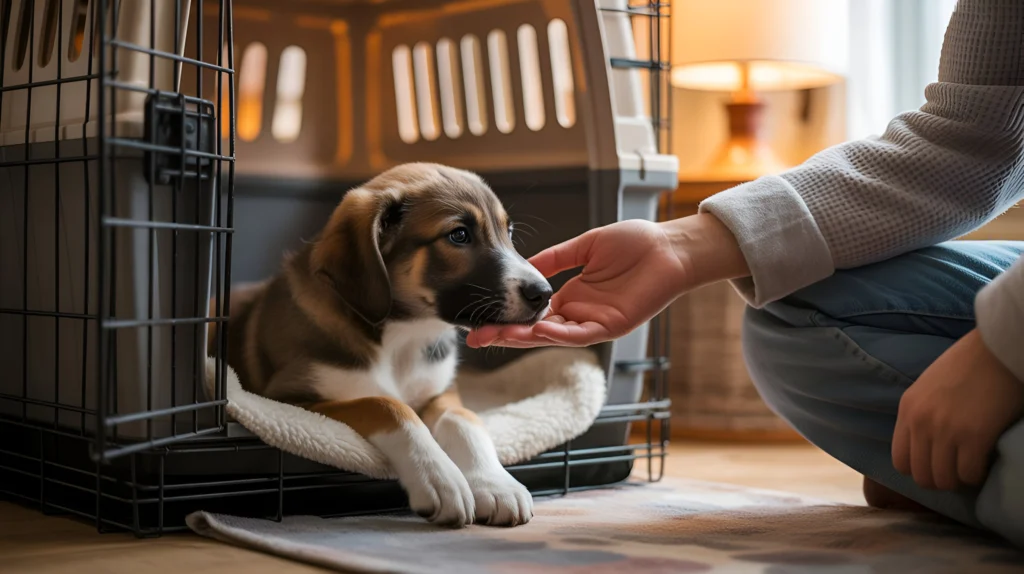
I remember Bella, a shy rescue I worked with. She had experienced stressful shelter life and initially froze at the sight of any crate. We started with just a minute at a time, paired with treats and soft praise. Slowly, Bella began entering on her own, curling up with a sigh as if saying, “Finally… a safe place that’s all mine.” Moments like these are exactly why how to crate train a puppy is more than technique — it’s building a lasting bond.
Why Trust is Everything
Trust is invisible, yet it drives everything in crate training:
- Puppies must feel safe, never punished, inside the crate.
- Consistency in your voice, cues, and routine creates security.
- Positive experiences outweigh fear or anxiety, cementing confidence.
Teaching how to crate train a puppy is really teaching trust and emotional security. Once established, this foundation improves every behavior, interaction, and training session in the future.
Using the Crate as a Communication Tool
The crate communicates more than “stay here.” Puppies interpret subtle messages:
- “It’s safe to rest here.”
- “You can relax without worry.”
- “I respect your space and will return.”
Through consistent reinforcement, your puppy learns not just obedience, but emotional literacy — reading your tone, energy, and presence.
Advanced Techniques for Lifelong Success
1. Natural Crate Routine
- Include crate time in meals, naps, and quiet periods.
- Use consistent verbal cues (“crate” or “bed”).
- Rotate toys or chews to maintain engagement.
2. Handling Separation Anxiety
- Start with brief departures, gradually extending the duration.
- Avoid dramatic exits or entrances. Predictability = calm.
- Include comforting items: blanket, worn t-shirt, or favorite toy.
3. Social Situations
- Let your puppy retreat to the crate when guests arrive.
- Praise calm behavior inside.
- Introduce new environments slowly with the crate as a secure base.
These strategies deepen trust and demonstrate how to crate train a puppy in practical, real-world situations.
Emotional Benefits for Puppy and Owner
Mastering the crate strengthens the emotional bond:
- Puppies gain independence and confidence.
- Owners develop empathy and observational skills.
- Anxiety reduces, routines smooth out, and daily life becomes more harmonious.
I’ve seen timid rescues blossom into confident, playful companions simply because their crate became a trusted sanctuary, and their humans reinforced routines consistently.
Maintaining the Bond Over Time
Even after your puppy is comfortable:
- Keep predictable crate routines.
- Use the crate during travel, vet visits, or new environments.
- Continue to reward calm behavior inside the crate.
Lifelong trust is built on daily reinforcement. A well-used crate strengthens the bond in ways owners notice every day.
Common Challenges for Experienced Owners
| Challenge | Solution |
| Puppy loses interest in crate | Rotate toys, add treats, adjust location |
| Older dog resists crate | Reintroduce gradually with positive reinforcement |
| Anxiety during travel | Short trips, include familiar items |
| Over-reliance on treats | Shift to praise and calm verbal cues |
| Inconsistent routine | Maintain predictable sessions |
Even experienced owners must apply how to crate train a puppy thoughtfully to maintain trust and routine.
Key Takeaways from Section Three
- The crate is a sanctuary and communication tool, not a punishment.
- Trust is the heart of effective crate training.
- Advanced routines reinforce calmness, independence, and resilience.
- Emotional connection is as crucial as practical training.
Consistency ensures lifelong benefits for both puppy and owner.
FAQ — Common Puppy Crate Questions
1. How long should I leave my puppy in the crate?
It depends on age. A simple rule I share with clients: puppy’s age in months + 1 = max hours. Start with short sessions and gradually increase. Remember, the crate is a safe haven, not a punishment.
2. My puppy cries or whines when I leave. What should I do?
Stay calm and avoid giving attention to the whining. Only reward quiet, calm behavior. Gradual departures work wonders — even the most anxious rescues learn to enjoy their crate over time.
3. Can crate training help with potty training?
Absolutely! Puppies naturally avoid soiling their sleeping space. Pair crate sessions with regular potty breaks and praise immediately when they succeed. This is a key reason why many owners ask, “how to crate train a dog for potty training?”
4. What if my puppy refuses to enter the crate?
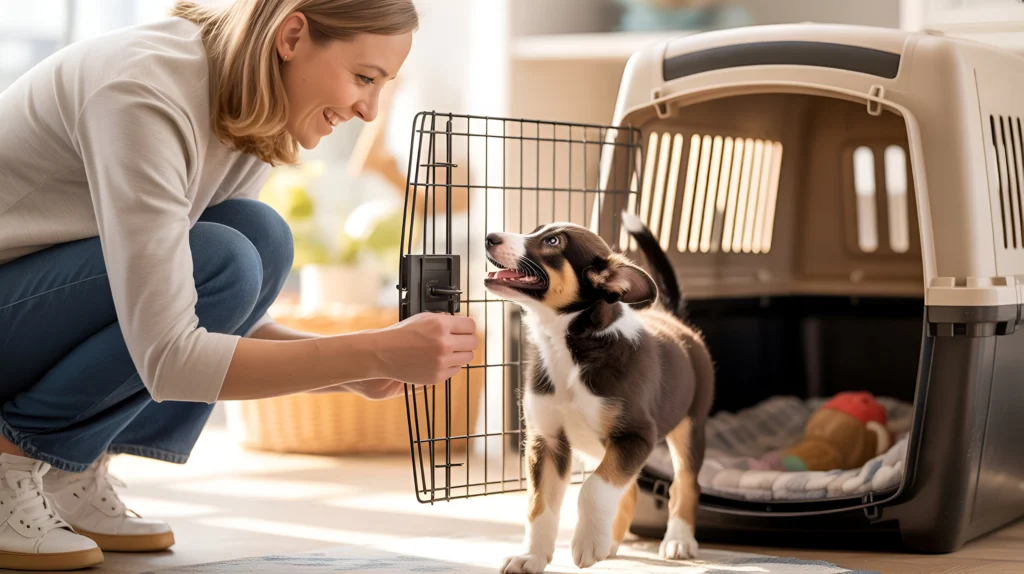
Make it inviting with treats, toys, and a soft blanket. Use a calm voice: “Come on, buddy — check it out.” Even letting a paw in counts as a victory. Celebrate micro wins to build confidence.
5. Should I keep using treats all the time?
Initially, yes — treats are motivation. Over time, transition to praise, petting, and calm verbal cues. This keeps the puppy engaged without relying solely on food.
6. How do I crate train an older or stubborn puppy?
Patience and consistency are key. Reintroduce the crate gradually with positive reinforcement, short sessions, and familiar scents. Trust-based methods work for dogs of any age.
7. Is it okay to use the crate when traveling or at the vet?
Definitely! A familiar crate reduces stress during car rides, vet visits, or new environments. Include a favorite blanket or toy and maintain consistent routines for comfort.
Final Thoughts — Building a Lifetime of Trust
When I look back at all the puppies I’ve trained over the years, one thing is clear: crate training isn’t just about containment — it’s about connection. Each time you teach your puppy to enter the crate calmly, you’re also teaching them to trust you, feel safe, and understand that home is their sanctuary.
I’ve seen timid rescues bloom into confident companions, and high-energy puppies learn patience, all because their humans took the time to teach the crate as a safe space rather than a punishment. You’ll laugh at some of the little mishaps — the puppy who stubbornly sits in front of the crate, or the one who thinks your hand is a treat dispenser — but those moments are part of the journey, and they make the victories even sweeter.
Remember, the crate is more than wood or wire — it’s a tool for safety, a hub of comfort, and a bridge for communication between you and your puppy. The sooner you start, the sooner your puppy will see it as their own little haven in your home.
So take a deep breath, grab some treats, and embrace the process. Patience, consistency, and a little bit of humor will carry you both a long way. By mastering how to crate train a puppy, you’re not just shaping behavior — you’re building a lifelong bond filled with trust, calm, and unconditional love.
Your puppy is counting on you. And trust me, once they get it, the tail wags, happy sighs, and cuddles will make every second worthwhile.