When I first brought home my goofy yellow lab, Benny, I thought I had everything figured out. I’d trained dozens of dogs, worked with clients for years, and knew all the right commands. But nothing—and I mean nothing—hits you quite like realizing your dog panics every time you walk out the door. Benny would cry, pace, and sometimes even try to claw through the door as soon as I left. That’s when I truly understood what separation anxiety in dogs feels like, both for the dog and for the human watching helplessly from the other side of the door.
If you’ve ever come home to shredded shoes, neighbors complaining about barking, or a trembling dog glued to your leg, you know the heartbreak. It’s not disobedience. It’s not “spoiled dog syndrome.” It’s fear — deep, honest-to-goodness panic that their person might never come back.
This article is my hands-on, trainer-tested guide to understanding and treating separation anxiety in dogs. I’ve written it the same way I talk to my clients in real life — with warmth, honesty, and a whole lot of real-world stories. You’ll learn what separation anxiety really is, how to recognize it early, and step-by-step methods to help your dog build confidence and calm.
You’ll also get motivation tips for stubborn dogs, advice for more serious cases, common mistakes to avoid, emotional insights about what your dog is really feeling, and answers to the questions I get most often from dog owners.
Before we dive in, take a breath. This is fixable. It takes patience, empathy, and structure — but I’ve seen hundreds of dogs go from panic to peace. And your dog can too.
What Separation Anxiety in Dogs Really Means
Let’s get something straight: separation anxiety in dogs isn’t a “behavior problem.” It’s an emotional one. When a dog with separation anxiety is left alone, they’re not misbehaving to spite you — they’re experiencing fear, stress, and even panic. Imagine a child who suddenly finds themselves lost in a store, frantically searching for their parent. That’s the emotional equivalent for your dog.
What’s Actually Happening Inside Their Mind
Dogs are pack animals by nature. Being separated from their “pack” — which now means you — triggers an ancient survival alarm in their brain. The part responsible for logic shuts down, and instinct takes over. They bark, scratch, chew, or soil because those actions are fueled by anxiety, not choice. To them, being alone feels unsafe.
It’s important to understand that no dog chooses to have separation anxiety. Many cases start after a big change:
- A new home or owner
- A shift in routine (like returning to work after remote work)
- The loss of a family member or another pet
- A traumatic event when left alone
Some dogs are genetically more sensitive; others simply attach deeply to their humans. But the bottom line is this: they’re not bad dogs — they’re scared dogs.
The Emotional Spectrum of Anxiety
Separation anxiety in dogs ranges from mild to extreme. On the mild end, a dog may whine softly or pace. On the severe side, you’ll see destructive behavior — chewing door frames, tearing blinds, or even injuring themselves trying to escape. Some dogs don’t make a sound but drool excessively or refuse to eat until you return.
The severity depends on how deep the fear runs, but the root emotion is always the same: panic over being left behind.
When I work with clients, I tell them to imagine their dog’s anxiety as a “fear thermometer.”
- 0–2: mild concern (restless, alert at door)
- 3–5: visible stress (whining, pacing, can’t relax)
- 6–8: panic behaviors (destruction, barking, escape attempts)
- 9–10: full-blown distress (drooling, self-injury, loss of control)
Training starts not at the boiling point, but where your dog can still think. That’s where real progress happens.
Why Understanding Separation Anxiety in Dogs Matters for Every Dog Owner
You might wonder, “Why is this such a big deal? Won’t my dog just get used to it?”
I wish it were that simple. But for many dogs, time alone doesn’t heal — it deepens the fear. When a dog repeatedly experiences separation anxiety in dogs during your absence, their brain becomes conditioned to expect panic every time you leave. The pattern reinforces itself until your routine departures become full-blown emotional triggers.
Why It’s Not Just About Barking or Damage
The most common calls I get are from exhausted owners saying, “I can’t take the barking anymore,” or “My landlord’s giving me a warning.” While those issues matter, the bigger concern is what’s happening inside your dog. Chronic stress affects their immune system, digestion, and even learning ability. It also chips away at trust — your dog starts associating your absence with terror, not calm.
A dog suffering from untreated separation anxiety may:
- Refuse food when left alone
- Develop ulcers or other stress-related health issues
- Exhibit depression-like symptoms
- Show aggression or irritability from constant anxiety
- Become hyper-attached and unable to relax even when you’re home
These dogs live in a cycle of worry — not just when you leave, but in anticipation of you leaving.
Why Fixing Separation Anxiety in Dogs Changes Everything
Treating separation anxiety in dogs isn’t just about stopping destruction or noise complaints. It’s about giving your dog peace of mind — the ability to feel safe, confident, and secure in their own skin.
When I see a dog finally nap calmly while their owner steps outside, that’s a bigger victory than any obedience title. It means trust has replaced fear. The owner can live freely again — go to work, grab coffee, visit family — without guilt or dread. And the dog can breathe, relax, and finally feel okay alone.
This transformation doesn’t happen overnight, but every calm minute you build matters. Each success — even five seconds of quiet before you return — is a tiny step toward freedom for both of you.
The Ripple Effect on Your Relationship
Something incredible happens when you start working through this process: your relationship with your dog deepens. You begin to communicate in quieter, more empathetic ways. You learn to read their signals — the flick of an ear, the sigh before pacing — and respond with patience instead of frustration.
Many of my clients tell me later that the process of helping their dog with separation anxiety made them better dog owners overall. They became calmer, more observant, and more confident. They started understanding their dog not as a “pet that misbehaves,” but as a partner learning how to cope.
And once that shift happens, the results stick — because now you’re not just training behavior; you’re healing emotion.
Why Separation Anxiety in Dogs Matters for You Too
Let’s be real: separation anxiety in dogs affects the human as much as the dog. I’ve seen owners rearrange work schedules, skip vacations, or feel trapped in their homes. It’s emotionally exhausting. You worry about your dog’s mental state, neighbors’ complaints, and your own guilt.
But here’s the good news — helping your dog overcome this doesn’t just heal them. It gives you your life back too. You’ll gain peace of mind knowing your dog feels secure, and that confidence will ripple into every part of your bond.
So yes — this is worth the effort. 100%.
How to Recognize Separation Anxiety in Dogs Signs
If you’ve ever come home to shredded pillows, scratch marks near the door, or a dog pacing frantically the second you grab your keys — you’re not alone. These are some of the most common signs of separation anxiety in dogs, and they’re often misread as “bad behavior.” But your dog isn’t being naughty — they’re scared.
Here’s the tricky part: separation anxiety doesn’t always look dramatic. Some dogs don’t destroy furniture or bark for hours. Sometimes, it’s subtle — a sad whimper, a refusal to eat, or that heavy sigh as you reach for the door handle.
Let’s break down a few real-world signs that trainers like me look for:
1. Pacing and Restlessness
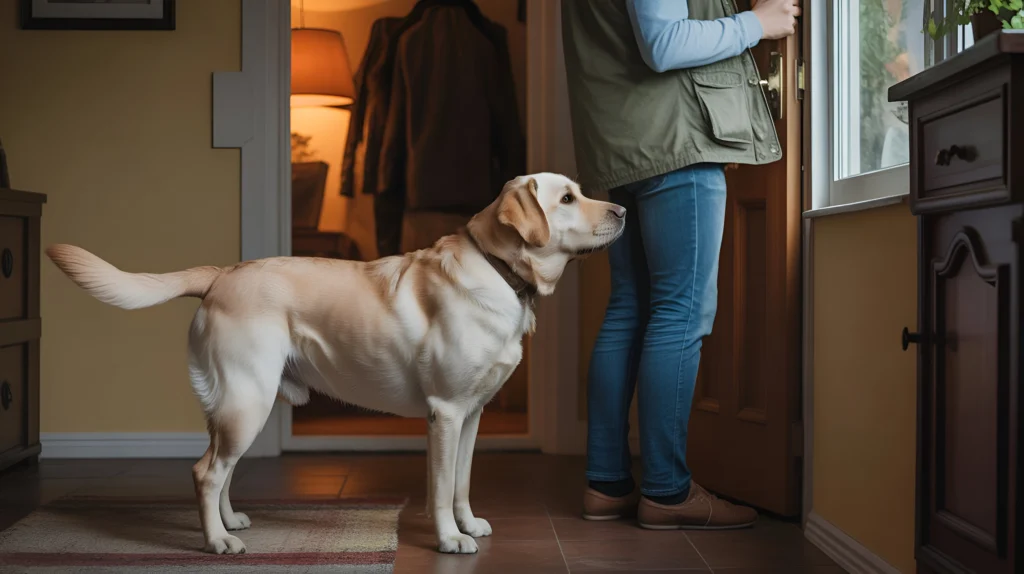
If your dog starts pacing as soon as you get ready to leave — even before you touch the doorknob — that’s often anxiety kicking in early. It’s like they’ve memorized your leaving routine: shoes, keys, coat, and boom — panic mode.
2. Excessive Barking or Whining
Dogs with separation anxiety in dogs often vocalize their distress. The moment you’re gone, they’ll bark, howl, or cry — not to annoy the neighbors, but because they’re calling out for reassurance.
3. Destructive Behavior
This one hurts — for both of you. A dog that chews door frames or tears at curtains is often trying to “break through” to get to you. It’s not defiance; it’s desperation.
4. Accidents Indoors
Even house-trained dogs might urinate or defecate when left alone. It’s a stress response, not a regression in training.
5. Shadowing Behavior
If your dog follows you everywhere — bathroom, kitchen, even to grab the mail — it’s not just loyalty. It’s often early-stage separation anxiety.
I once worked with a beagle named Rosie who’d sit trembling beside the front door every morning when her owner went to work. For months, her people thought she just missed them a little. But when we set up a camera, we saw the full story — panting, pacing, whining, then scratching the door until she wore down her nails. That was separation anxiety, clear as day.
The earlier you catch these signs, the easier it is to help your dog. Which brings us to the part most owners really want: what can you actually do about it?
Step-by-Step Guide: How to Help a Dog with Separation Anxiety in Dogs
Helping a dog overcome separation anxiety isn’t about one magic command — it’s about building confidence, trust, and calm one step at a time.
Here’s the exact process I use with my clients. It works best when done patiently and consistently.
Step 1: Identify the Triggers
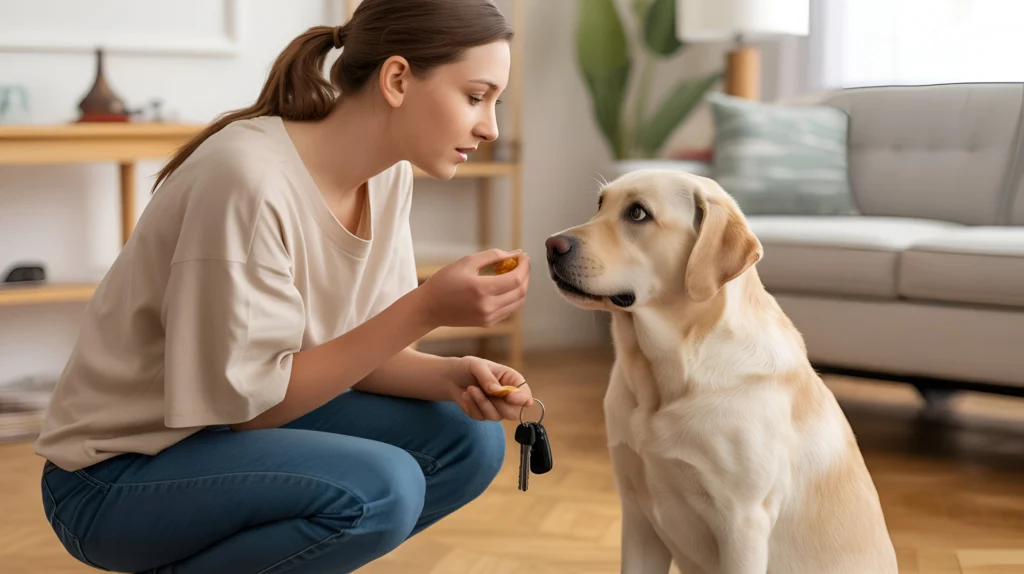
Start by observing what sets your dog off. Is it the sound of your keys? Your shoes? The garage door? Dogs learn patterns fast — sometimes too fast. Write down what seems to cue their anxiety so you can start desensitizing those triggers later.
Step 2: Practice Calm Departures and Returns
When you leave, make it boring. No long goodbyes, no “Mommy’s going now!” in a sad voice. Dogs mirror your emotions. If you act like leaving is no big deal, you teach your dog that it really isn’t a big deal.
Same for when you come home — keep it calm. Wait until your dog settles before giving affection.
Step 3: Start With Short Absences
If your dog can’t handle you leaving for 10 minutes, don’t start there. Begin with seconds, not minutes.
Walk out the door for 30 seconds, come back in, and reward calm behavior. Gradually increase the time as your dog learns that you always come back.
Step 4: Create a Safe “Calm Zone”
Every dog needs a space where they feel secure — whether it’s a crate (for those who love them), a playpen, or a comfy corner. The goal is to make this area feel safe and positive, never like punishment.
Use enrichment toys, frozen Kongs, or snuffle mats so your dog learns that alone time means good things happen.
Step 5: Add Sound and Scent
Background noise helps more than most owners realize. A quiet TV, soft music, or even a podcast with gentle voices can create a sense of normalcy.
Leaving behind a worn T-shirt that smells like you? That’s another trick that helps dogs feel less alone.
Step 6: Build Up Independence
Encourage your dog to spend short periods in another room while you’re still home. Reward calm, quiet behavior. Over time, this builds “separation confidence” — they learn it’s okay not to be glued to your side.
Step 7: Balance Exercise and Rest
A tired dog is a calmer dog, but don’t rely on exercise alone. A morning walk before you leave helps, but mental stimulation (training games, scent work, puzzle feeders) is just as crucial.
Step 8: Don’t Punish Anxiety
This is one I can’t stress enough. If your dog chews something or barks while you’re gone, never punish them afterward. Separation anxiety in dogs isn’t disobedience — it’s fear.
Punishment only increases the stress, making things worse over time.
I had a German Shepherd client named Duke — a big, confident-looking boy who’d howl like a baby every time his owner left. We started with five-second departures, and over two months, he worked up to two full hours of calm alone time. His success didn’t come from dominance or discipline — it came from trust and repetition.
That’s what separation anxiety training is really about: teaching your dog that being alone doesn’t mean being abandoned.
Motivation Tips for Stubborn Dogs
Some dogs just dig their heels in. You know the type — they freeze when you try a new step, ignore treats, or act like nothing you do matters. It can be frustrating, but it’s not hopeless. Stubbornness often comes from fear or high anxiety levels, not defiance. These behaviors are often linked to separation anxiety in dogs. Here’s how I help owners turn resistance into progress.
1. Rotate Ultra-High-Value Rewards
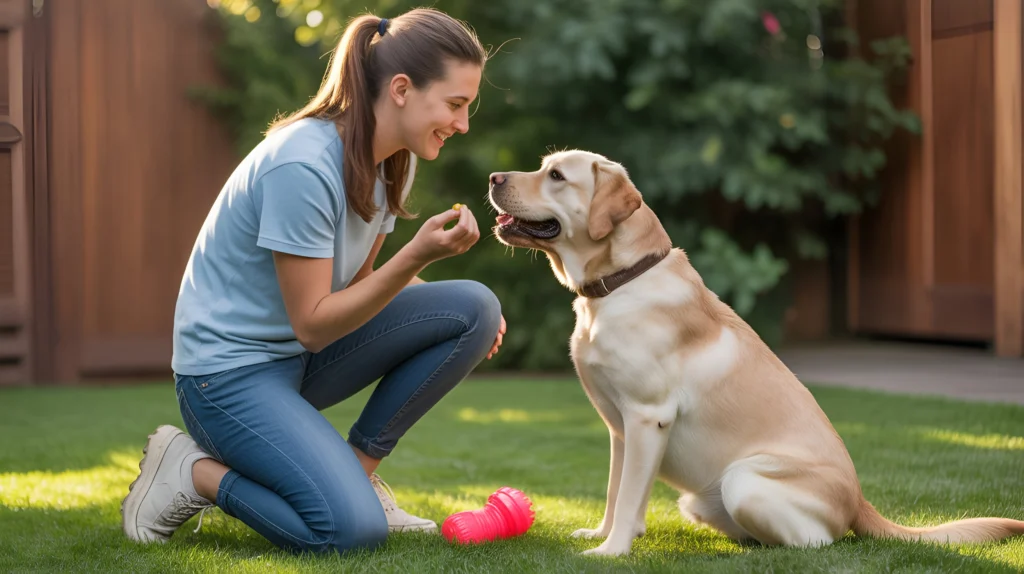
Not all treats are created equal. For stubborn or highly anxious dogs, I keep a “special stash” — freeze-dried chicken, small cheese cubes, or a spoonful of peanut butter in a Kong. These are only for departure and calmness training sessions. The novelty and value keep the dog’s attention, even when anxiety is high.
2. Use Novelty and Mental Games
Dogs who are focused on their anxiety often respond better when distracted with mentally challenging games. Scent work, puzzle feeders, or hide-and-seek with treats can burn cognitive energy, which is often more effective than physical exercise alone.
3. Keep Reunions Low-Key
Dramatic hellos reinforce panic. If you leave for 10 minutes and return with an emotional flourish, your dog’s brain learns: “Leaving and coming back = a huge emotional event.” Instead, enter calmly, wait for your dog to settle, and reward quiet behavior.
4. Variable Reinforcement
Sometimes the reward is super high, sometimes small. This unpredictability keeps your dog engaged and more motivated to repeat calm behaviors consistently.
5. Counter-Conditioning
Pair departures with positive experiences. For example, right before you leave, engage your dog in a short training game or give a favorite toy. Over time, your dog begins associating your absence with good things instead of panic.
I once worked with a stubborn terrier named Mabel. She would scratch at the door the second her owner touched her coat. By carefully rotating high-value treats and adding small training games, Mabel went from panicking in minutes to calmly settling in her bed before departures. The change didn’t happen overnight, but persistence paid off.
Advanced Challenges for Experienced Owners
For some dogs, basic desensitization isn’t enough. Maybe your dog’s panic escalates within minutes, or regressions occur after minor schedule changes. Advanced methods can help for separation anxiety in dogs.
Long, Gradual Desensitization
Dogs often need extremely small, incremental steps. If your dog panics after five minutes, start with 30-second departures and increase by tiny increments. Keep detailed logs of progress and setbacks — training is rarely linear.
Remote Monitoring and Analysis
Use a camera to see exactly when anxiety peaks. For example, your dog may not react to the door closing but may panic when your car engine starts. Identifying triggers allows you to target training precisely.
Multi-Dog Households
Separation anxiety in dogs can be complicated when multiple dogs are present. Sometimes one dog amplifies the anxiety of another. Train them separately first and gradually reintroduce combined departures. Observe carefully to see whether calm dogs help or whether panic spreads.
Environmental Supports
White noise, classical music, pheromone diffusers, and calming wraps can reduce baseline anxiety. Combine these with consistent departures and training to create a safe, predictable environment.
When Medication Is Helpful
For dogs with chronic, severe anxiety, consult a veterinarian. Short-term medication can reduce panic enough for training to be effective. Medication should never replace training — it’s a tool to make learning possible, not a shortcut.
Advanced cases demand patience, observation, and consistent logging of behavior. I’ve had clients who spent months on minute-long departures, and the payoff is enormous. Their dogs learned not only to tolerate alone time but to expect it calmly.
In my experience, combining high-value rewards, incremental exposure, environmental supports, and, if necessary, veterinary guidance is the formula that works best for stubborn or advanced cases.
Common Mistakes and How to Fix Them
Even the most well-meaning dog owners can stumble when dealing with separation anxiety in dogs. Understanding what not to do is just as important as knowing what works. Here are the mistakes I see most often:
1. Over-Coddling or Over-Attention
Many owners try to soothe anxiety by hugging, talking, or prolonging goodbyes. While it feels natural, this can unintentionally reinforce panic. Dogs learn that leaving = a big emotional event. The fix: keep departures and arrivals calm and neutral. Reward calm behavior, not anxiety.
2. Punishing Destructive Behavior
Punishment is the enemy of progress in separation anxiety in dogs. A dog who chews, scratches, or barks out of fear isn’t being “bad.” Punishing them only adds stress and can worsen anxiety. Instead, redirect, reward calmness, and focus on building confidence gradually.
3. Skipping Small Steps
Some owners jump too quickly into long absences or complex training. Even small dogs need slow, incremental exposure to build trust and resilience. Patience is your best tool here.
4. Inconsistency
Training only when convenient — or using different methods randomly — confuses your dog. Consistency in routine, rewards, and departures is key. Dogs thrive on predictability.
5. Ignoring Subtle Signs
Sometimes the signs of anxiety are not obvious. Whining, pacing, drooling, or obsessive behaviors can all signal stress. Early detection allows for more effective intervention.
The overarching lesson: treat separation anxiety as an emotional problem, not a behavioral flaw. Addressing mistakes early prevents frustration for both dog and owner.
Emotional Benefits and Communication
Helping a dog overcome separation anxiety in dogs is about more than stopping destructive behaviors — it’s a pathway to emotional growth for both of you.
Understanding Your Dog’s Feelings
Dogs experience the world through emotion first. When you recognize their fear and respond with patience, you build trust. A dog who once panicked can learn that alone time isn’t dangerous — it’s safe, predictable, and sometimes even enjoyable.
Strengthening the Bond
Working through anxiety together fosters deeper communication. You begin noticing subtle cues: a flick of the ear, a change in posture, or a soft whine. Responding appropriately teaches your dog that their feelings are understood and respected.
Mutual Confidence
As your dog learns to relax alone, your confidence grows too. No more guilt trips or constant worry — just a strong, respectful bond. You’ll notice calmer interactions, more playful energy, and a sense of security on both sides.
Real-World Case Study
Take Max, a rescue shepherd mix I worked with recently. Max had severe separation anxiety — barking, scratching, and pacing every time his owner left for work. His family tried crating, yelling, and even punishing, but nothing worked.
We started by:
- Observing triggers and daily patterns
- Introducing a calm departure routine
- Short, gradual absences with high-value treats
- Mental stimulation games before leaving
- Incremental exposure to longer alone times
Over eight weeks, Max went from full-blown panic to calmly resting in his “safe zone” for several hours. His owners noticed less stress, fewer accidents, and — most importantly — a happier, more relaxed dog who trusted them more than ever.
Stories like Max’s show that treating separation anxiety in dogs isn’t just about managing behavior — it’s about healing emotion, building trust, and creating a stronger bond that lasts a lifetime.
FAQ: Common Questions from Dog Owners
Q1: How do I know if my dog has separation anxiety or is just being clingy?
A: True separation anxiety usually shows panic behaviors when you leave or even prepare to leave — pacing, whining, drooling, destructiveness, or bathroom accidents. Mild clinginess might just involve following you around calmly, but no extreme stress.
Q2: Can separation anxiety in dogs go away on its own?
A: Usually not. Without intervention, anxiety often worsens over time. Early detection and structured training are key to preventing long-term stress and destructive behaviors.
Q3: How long does it take to fix a dog’s separation anxiety?
A: It varies. Mild cases may improve in a few weeks; severe anxiety can take months of consistent, patient work. The key is gradual exposure, high-value rewards, and calm routines.
Q4: Can medication help my dog?
A: For severe anxiety, short-term veterinary-prescribed medication can help your dog remain calm enough to benefit from training. Medication isn’t a cure — it’s a tool to enable learning.
Q5: My dog regresses after setbacks. Is this normal?
A: Absolutely. Regression is common. Dogs often need reinforcement over time. Celebrate small successes and return to shorter, manageable steps if needed.
Q6: How do I keep my dog calm when I leave for long periods?
A: Build up independence gradually, provide enrichment toys, create a safe “calm zone,” and ensure your dog is well-exercised and mentally stimulated before departure.
Q7: Can multiple dogs in one household affect separation anxiety?
A: Yes. Sometimes one dog’s anxiety triggers another. Train individually first, then combine departures slowly. Monitor interactions to see what helps or hinders calmness.
Final Thoughts / Key Takeaways
Helping your dog overcome separation anxiety in dogs isn’t just about stopping barking, chewing, or accidents. It’s about healing emotion, building trust, and strengthening your bond.
Start small. Keep departures calm. Use high-value rewards. Gradually extend alone time. Monitor triggers and celebrate every small success. Consistency and patience are your best allies.
When you approach training with empathy, your dog learns that alone time is safe. You gain peace of mind. And together, you create a life where both of you can thrive — free from fear, guilt, and frustration.
Remember, even tiny steps matter. Five seconds of calm today can lead to hours of confidence tomorrow. Begin now, stay consistent, and trust the process. Your dog’s emotional health — and your relationship — will thank you.