

If you’ve ever tried to have a peaceful evening — maybe answering emails, watching your favorite show, or putting the baby to sleep — and your dog suddenly starts barking at every car door, rustle, or breeze outside, you know exactly why the quiet command for dogs matters.
I remember one of my clients, Tom, a first-time Golden Retriever owner, calling me one evening in sheer frustration.
“Mike, I love Cooper, but I think he’s auditioning for a barking contest!”
Cooper wasn’t a bad dog — just misunderstood. Like many dogs, he barked to alert, express excitement, and sometimes simply out of boredom. What Cooper didn’t understand was when to stop.
That’s where the quiet command for dogs comes in — not as a way to silence personality, but as a bridge between emotion and understanding.
What the Quiet Command Really Means
The quiet command for dogs isn’t about forcing silence.
It’s about teaching your dog to manage energy and emotion in a world full of triggers.
When a dog barks, it’s their version of talking. They might be saying:
- “Hey, something’s outside!”
- “I’m bored!”
- “I’m nervous!”
- “You’re home! I missed you!”
None of these are “wrong” reasons — they’re communication. But, as with people, dogs need to know when it’s time to stop talking and start listening.
The “quiet” command gives your dog emotional regulation — a skill that brings calm, balance, and confidence. It’s a cornerstone of good canine manners and a sign of mutual respect between dog and owner.
When taught properly, this command becomes more than obedience. It becomes connection. You say “quiet,” and your dog learns:
“I trust you. You’re in control. I can relax now.”
That’s the emotional heart of true training — not control through dominance, but peace through communication.
Why the Quiet Command for Dogs Matters
Training your dog to respond to “quiet” goes beyond just stopping noise.
It builds confidence, trust, and mental control, and here’s why every dog owner should teach it.
1. It Keeps Your Home Peaceful
Constant barking creates stress — for you, your neighbors, and even your dog. Teaching the quiet command helps everyone breathe easier. It turns chaotic barking episodes into moments of calm understanding.
2. It Keeps Your Dog Safer
A dog that barks uncontrollably can miss important cues or become reactive in dangerous situations — like lunging toward a stranger or chasing something during a walk.
When your dog understands “quiet,” they learn to pause and look to you for guidance.
That pause could prevent a fight, injury, or even save a life.
3. It Strengthens Your Bond
Dogs feel secure when they know their human can guide them. When you use the quiet command for dogs, you’re not punishing — you’re reassuring.
Your voice becomes their anchor. Your calm becomes their calm.
And the magic? Over time, your dog begins to self-regulate. You won’t always have to say “quiet.” They’ll choose it.
4. It Builds Emotional Intelligence
Yes, dogs have emotional intelligence! The quiet command for dogs teaches patience and emotional control. It’s especially helpful for anxious or reactive breeds like Border Collies, Shepherds, or Terriers.
When your dog learns to pause instead of react, they begin to approach life with more confidence and less fear.
5. It’s the Foundation for Advanced Commands
“Quiet” pairs beautifully with other verbal cues. You can combine it with commands like “Speak,” “Stay,” or “Leave it” to teach emotional transitions — excitement to calm, motion to stillness.
That balance is what transforms an ordinary pet into an exceptional companion.
Understanding the Psychology Behind Barking
Before we teach “quiet,” we must understand why dogs bark. Not all barking is created equal, and recognizing the emotional root of the noise is crucial to fair, effective training.
Here are the main barking triggers every trainer learns to decode:
| Type of Barking | What It Means | Training Approach |
| Alert Barking | “Someone’s here!” | Acknowledge it, then redirect with “quiet.” |
| Excitement Barking | “Play with me!” | Reward calm energy before giving attention. |
| Frustration Barking | “I can’t reach it!” | Increase patience training and use “wait.” |
| Anxiety Barking | “Don’t leave me!” | Build confidence through desensitization and reassurance. |
| Attention-Seeking Barking | “Look at me!” | Ignore noise; reward calm silence. |
Once you identify the reason, the quiet command for dogs becomes easier and more compassionate to teach.
Before You Start Training
Before jumping into the “how,” there are a few key foundations to set up success.
1. Pick the Right Timing
You can’t teach “quiet” in chaos. Start when your dog is only slightly stimulated — not in full barking mode.
2. Choose the Right Reward
Find what truly motivates your dog: treats, toys, or even your voice. The more personal the reward, the faster they’ll learn.
3. Stay Calm
Never yell “quiet!” to stop barking — it only adds more noise. Instead, use a calm, firm tone. You want your dog to mirror your composure.
4. Keep Sessions Short
Dogs learn better in small bursts — 5 to 10 minutes, twice daily, is ideal. Long sessions create fatigue and frustration.
5. Pair It with “Speak”
Oddly enough, the easiest way to teach “quiet” is to first teach “speak.”
Once your dog understands how to bark on command, you can then introduce control by teaching them to stop on cue.

How to Teach the Quiet Command for Dogs: Step-by-Step
When teaching the quiet command for dogs, patience is your superpower. It’s not about dominating your dog — it’s about building trust so they choose calmness. Below is my tried-and-true process, refined over decades of working with hundreds of breeds — from stubborn Terriers to sensitive Shepherds.
Step 1: Teach the “Speak” Command First
It may sound strange, but to teach quiet, your dog first needs to understand how to speak on cue.
Start by triggering a bark naturally — for example, ring the doorbell or knock gently on a table. The moment your dog barks, say “Speak!” in an upbeat tone and reward immediately.
Repeat a few times a day until your dog barks consistently when you say “Speak.” This helps them connect vocalizing to your cue, not random impulses.
Once “speak” becomes reliable, you’ve just laid the foundation for silence.
Step 2: Introduce the “Quiet” Command
Now that your dog knows how to bark on cue, it’s time to teach balance — the pause after the sound.
- Say “Speak!”
- Let your dog bark once or twice.
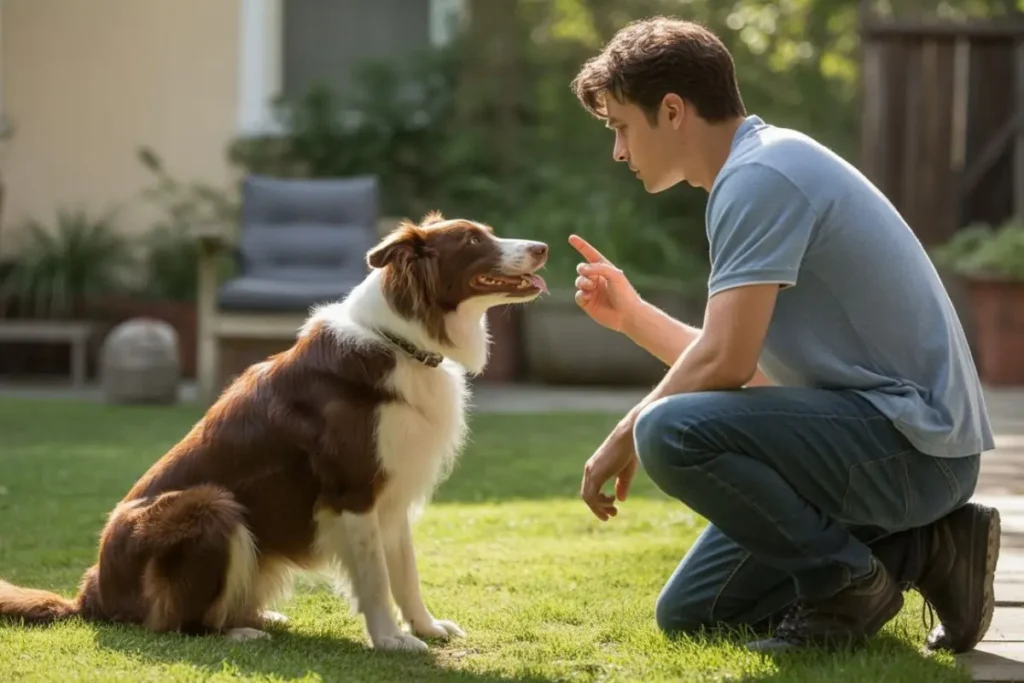
- Then hold up your hand like a gentle stop sign and calmly say “Quiet.”
- The instant they pause or take a breath, reward generously — treat, praise, soft tone.
Timing is everything. That brief pause is your golden moment.
Pro tip: Don’t wait for full silence at first. Reward attempts to stop barking. Dogs learn by association, so build success gradually.
Repeat 5–6 short sessions per day. Within a week or two, you’ll see your dog anticipate your cue — even lowering their energy before you say “quiet.”
Step 3: Add a Hand Signal
Dogs read body language faster than words. Once your dog understands “quiet,” pair it with a subtle hand signal — like gently closing your hand or placing a finger near your lips.
Eventually, you can give the hand cue alone without speaking. This silent communication is especially useful in public spaces or training competitions.
Step 4: Reduce the Treats Gradually
You don’t want a dog that only listens when snacks are around. Once your dog consistently obeys, start fading treats and replace them with praise, play, or a gentle pat.
Reward becomes emotion.
Your calm tone and smile become the dog’s reward because they associate obedience with peace, not performance.
Step 5: Practice in Real-Life Scenarios
The true test of the quiet command for dogs isn’t in your living room — it’s at the park, the vet’s office, or when the mail carrier arrives.
Start by introducing mild distractions:
- Have a family member walk by the window.
- Play recorded doorbell sounds.
- Let another dog bark nearby (if safe).
Each time your dog starts to bark, calmly give the “quiet” cue, then reward silence. Over time, increase the difficulty.
This phase transforms theory into reliability.
Motivation Tips for Stubborn Barkers
Some dogs treat barking like a sport. If you’ve got one of those, don’t worry — I’ve trained plenty. These are the tricks that work even with the toughest cases.
1. Use Calm Energy, Always
Dogs feed off your tone. If you shout “QUIET!” in frustration, your dog hears:
“Human is barking with me!”
Instead, lower your tone. Calm, firm, slow. That difference alone often stops 30% of barking behavior.
2. Reward Timing Is Everything
Most owners wait too long to reward silence. Don’t.
Mark the first pause with praise or a clicker — that’s the behavior you want repeated.
Even half a second of quiet counts at first. Build on that incrementally.
3. Exercise First, Train Later
A tired dog is a teachable dog. Barking often stems from pent-up energy.
Before training sessions, take a brisk walk, a game of fetch, or even mental exercises like scent games.
4. Control the Environment
If your dog barks excessively at windows, block visual triggers during early stages of training. It’s not cheating — it’s setting the stage for learning.
Later, you can reintroduce distractions for real-world proofing.
5. Introduce “Speak” as a Balance Tool
Oddly enough, encouraging your dog to speak on cue can reduce spontaneous barking. It gives them permission to express themselves — but only when you ask.
Think of it as emotional organization:
“I can bark when asked, but relax when told to be quiet.”
That structure satisfies their instinct while maintaining control.
Advanced Challenges: Turning Quiet into a Lifestyle
Once your dog reliably follows the quiet command for dogs at home, you’re ready for advanced training — where silence becomes second nature, not just a command.
1. Proofing the Command
Proofing means practicing in varied environments until the behavior becomes automatic.
Work in places with different noises, smells, and sights:
- Outdoor parks
- Busy sidewalks
- Training classes
Start with low-stimulation areas, then gradually increase distractions. Always end on success, not frustration.
2. Handling Reactive Breeds
Some dogs — especially herding and guardian breeds — are genetically wired to alert-bark. Don’t fight nature; refine it.
Instead of suppressing barking completely, teach them when it’s appropriate:
“Thank you for alerting me. Now, quiet.”
This teaches responsibility rather than punishment.
3. Working with Anxiety Barking
If your dog’s barking is fear-based, compassion is key. Anxiety barkers need comfort more than correction.
Create a calm environment, use soothing tones, and avoid punishment — it can make things worse.
For some, background music, gentle crate training, or calming scents (like lavender) can help reduce triggers.
4. Multi-Dog Households
In multi-dog homes, one bark can ignite the whole pack. Teach “quiet” individually first, then together.
Dogs learn by example — once your calmest dog masters it, the others often follow.
Common Mistakes When Teaching the Quiet Command (and How to Fix Them)
Even the most loving dog owners can unintentionally make mistakes during quiet command for dogs training.
Here are the seven most common errors I’ve seen — and how to fix each with kindness and strategy.
1. Yelling “Quiet!” in Frustration
The number one mistake? Shouting the word “quiet.”
When you raise your voice, your dog hears excitement or conflict — not calm authority.
Fix:
Lower your tone, take a slow breath, and say “quiet” in a firm, steady voice. Dogs mirror human energy; your calm is their cue to relax.
2. Inconsistent Reinforcement
Some owners reward calm behavior one day and ignore it the next. That confuses the dog — they can’t link “quiet” with predictable rewards.
Fix:
Be consistent for at least three weeks. Reward every successful response before gradually reducing treats. Reliability grows from repetition.
3. Teaching in Overstimulating Environments Too Soon
Starting in a chaotic space (like a park or crowded street) can overwhelm your dog.
Fix:
Begin indoors, where distractions are minimal. Once your dog responds reliably, increase the difficulty gradually. It’s not avoidance — it’s smart progression.
4. Forgetting to Teach Emotional Calm
Many owners focus on physical silence but ignore emotional tension.
A dog can be “quiet” but still anxious inside.
Fix:
Pair “quiet” with relaxation exercises — slow petting, deep breathing beside your dog, calm verbal praise. Let quiet feel good, not forced.
5. Punishing Barking Instead of Redirecting It
Scolding or using aversive methods may suppress barking temporarily, but it damages trust. Dogs learn best through positive association, not fear.
Fix:
Reward what you want — calm — instead of punishing what you don’t.
If barking is excessive, address the root cause (boredom, stress, lack of exercise).
6. Expecting Instant Results
Some dogs catch on within days. Others take weeks.
Remember, you’re not just teaching a command — you’re rewiring emotion.
Fix:
Celebrate small progress. If your dog goes from ten minutes of barking to one minute, that’s success worth rewarding.
7. Not Practicing Daily
Behavioral training is like a muscle — it weakens without repetition.
Fix:
Integrate the quiet command for dogs into everyday moments:
- Before meals
- When guests arrive
- During walks
- While watching TV
Every small practice reinforces the bond between you and your dog.
The Emotional Benefits of the Quiet Command
When you truly master the quiet command for dogs, something deeper happens — it reshapes the emotional dynamic between you and your pet.
1. You Build Mutual Respect
Your dog learns that your calm voice matters more than outside noise. That’s leadership without intimidation — the kind of respect built on trust.
2. You Reduce Anxiety (for Both of You)
A constantly barking dog keeps everyone tense.
Once you both learn “quiet,” peace becomes contagious. Owners often tell me:
“When I say quiet, I feel calmer too.”
Training becomes therapy — not just for the dog, but for you as well.
3. You Strengthen Nonverbal Communication
Eventually, you won’t even need to speak. Your dog will understand a look, a gesture, a breath. That’s the silent language of companionship.
4. You Deepen the Bond of Safety and Trust
When your dog learns to be still, they begin to trust your lead in every situation — traffic, guests, noises, even thunderstorms.This command becomes a symbol: You guide, they follow — both in peace.
FAQs About the Quiet Command for Dogs
Here are the most common questions I’ve received from real dog owners over the years — answered with practical, compassionate advice.
1. How long does it take to teach the quiet command?
Most dogs learn the basics in 1–3 weeks with daily 10-minute sessions.
Consistency matters more than duration — stay patient and celebrate progress.
2. Can I use the quiet command with multiple dogs at once?
Start with one dog first. Once they understand, use the trained dog as a role model for the others. Dogs learn from each other surprisingly fast.
3. Is it okay to use a vibration or ultrasonic collar to stop barking?
As a professional trainer, I don’t recommend it.
These tools suppress behavior but don’t teach understanding.
The goal of the quiet command for dogs is communication, not control.
4. My dog barks when left alone — will quiet training help?
Yes, but you’ll also need to address separation anxiety.
Combine “quiet” training with short absences, puzzle toys, and calm departures. Slowly build independence.
5. Should I reward my dog every single time they’re quiet?
At first, yes — reward immediately. Later, switch to variable rewards (sometimes treats, sometimes praise). This builds lasting obedience without dependency.
6. What’s the difference between “quiet” and “enough”?
They can mean the same thing if you’re consistent.
The word itself doesn’t matter — the tone, timing, and consistency do.
Most trainers prefer “quiet” because it’s clear and distinct.
7. Can senior dogs still learn the quiet command?
Absolutely! Older dogs are often more emotionally attuned and eager to please.
Just use softer tones and smaller treats to match their pace.
Final Thoughts: The Gift of Calm Communication
Teaching the quiet command for dogs isn’t about silencing your pet — it’s about teaching them peace.
It’s a conversation, not a command; a lesson in trust, not dominance.
When your dog learns to respond to “quiet,” what you’ve really taught them is:
“You don’t have to fix everything. I’ve got this.”
That realization — that their human can handle the world — frees them from anxiety. It also reminds you that great training isn’t about control; it’s about connection.
So next time your dog barks at a passing car or neighbor’s cat, smile.
You’re not just teaching obedience — you’re teaching harmony.
And in that moment of calm, you’ll both feel something profound:
a shared language of love, patience, and trust.
Pingback: Calm and Focused Dog Training: Teach Balance & Trust