
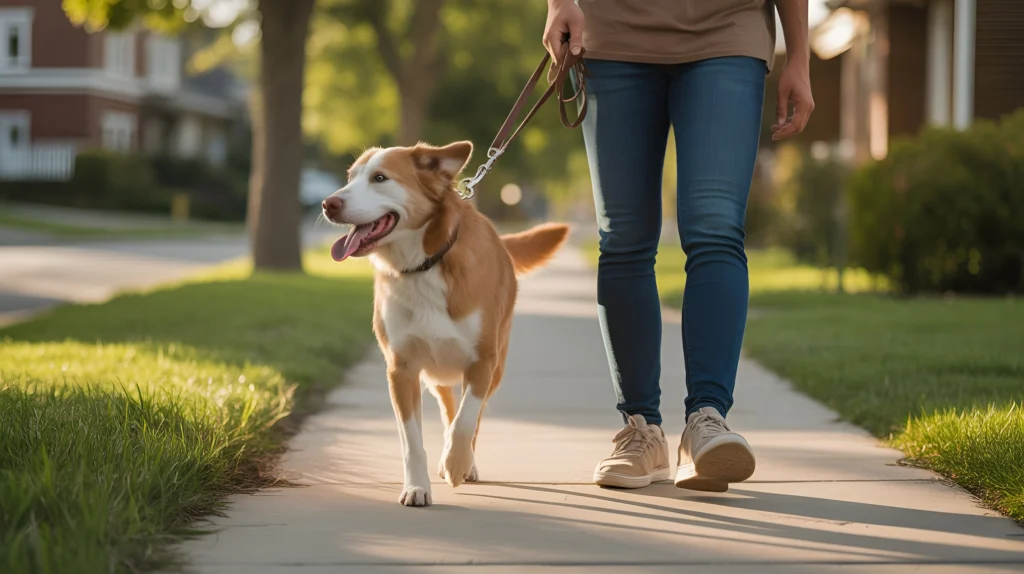
Teach your dog to walk by your side with calm confidence and joyful connection.
The Walk That Changed Everything
It started like any other morning walk.
Coffee in one hand, leash in the other, my young shepherd mix, Luna, trotting ahead like she owned the sidewalk.
Then a squirrel appeared.
In one heartbeat, she lunged. Coffee flew, leash burned my palm, and I found myself jogging — not walking — down the street, waving like a confused marathoner.
That was the day I realized something simple but profound:
the heel dog command isn’t about control — it’s about connection.
When your dog walks with you — truly with you — shoulder aligned, calm and focused — it feels like dancing. You move as a team, two beings communicating through rhythm, trust, and quiet respect.
That’s the power of a good heel.
What the Heel Command Really Means
Many owners think heel means “stay glued to my leg forever.”
But that’s not what it’s about — not for family dogs.
In real-life terms, the heel dog command simply means:
“Walk politely next to me, matching my pace, staying aware of me — not dragging, lunging, or wandering.”
It’s about focus and teamwork, not robotic obedience.
When I teach new owners, I tell them: Your leash is not a steering wheel — it’s a conversation line.
The heel cue becomes your way to say, “Let’s walk together.”
Whether you’re strolling through the neighborhood or navigating a busy farmers’ market, heeling is your dog’s reminder that your world is shared — and you move in harmony.
Why It Matters
Walking nicely on a leash is one of the most freeing skills a dog can learn.
Without it, walks become battles — leash pulling, lunging, frustration on both ends.
But once your dog masters the heel dog command, everything changes:
- Calm walks replace chaos.
No more yanking or shouting their name fifty times. - Safety skyrockets.
A dog who heels won’t dart into traffic or trip you on stairs. - Bonding deepens.
You’re no longer just walking your dog — you’re walking with them.
One of my clients, an older gentleman with a golden retriever named Daisy, told me after training:
“It’s like she finally hears me without words.”
That’s what heel gives you — a silent, mutual understanding.
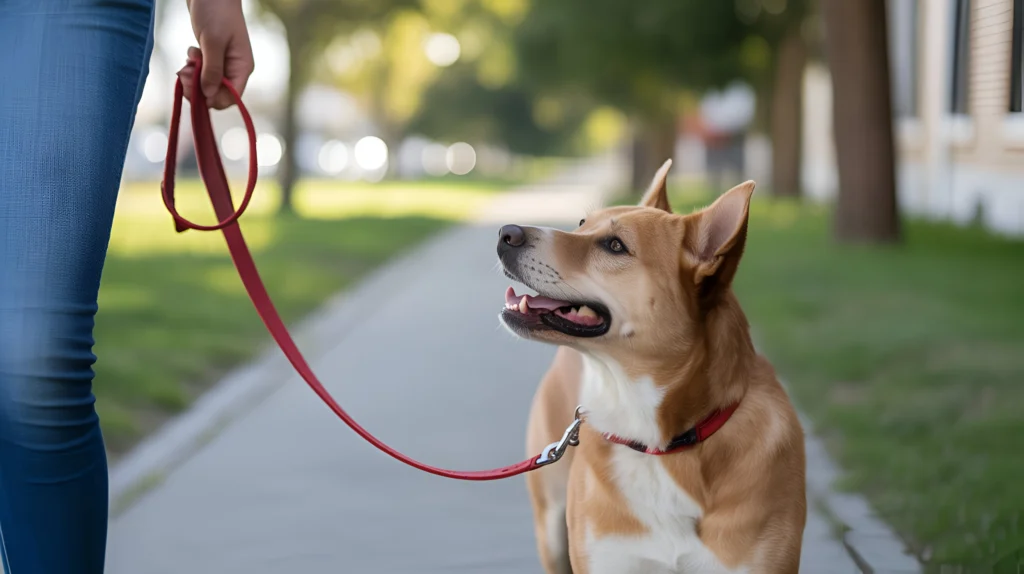
Step-by-Step Guide: Teaching the Heel Dog Command
Let’s make this practical.
Here’s how to teach your dog to walk calmly by your side — without frustration or tension.
Step 1: Choose a Side
Decide whether you want your dog on your left or right side — and stick to it.
Traditionally, the left is used in obedience work, but the side doesn’t matter.
Consistency does.
Whenever your dog switches sides, gently guide them back using your leash and a cue like “Heel.”
Step 2: Start Indoors or in a Quiet Area
Begin in a distraction-free zone — your hallway, driveway, or backyard.
Attach the leash and hold a few treats at your side.
Take one step forward, say “Heel” once, and reward your dog when they stay beside you.
The goal is to mark the position, not perfection.
Repeat short bursts: two steps, reward; three steps, reward.
Keep it calm, fun, and full of praise.
Step 3: Use Lure and Reward
Hold a treat in the hand closest to your dog’s nose and guide them beside your leg as you walk.
Mark success with a click or “Yes!” when your dog stays in position, then feed from your side (not in front).
After a few sessions, fade the treat to random rewards so they begin working for praise and position, not just food.
Step 4: Add Stops and Turns
Once your dog follows smoothly, mix it up: stop suddenly, turn left or right.
If your dog stays by your side, praise generously.
If they surge ahead, simply stop walking — become a tree.
No movement, no progress until they return to you.
They’ll quickly learn that pulling gets them nowhere — literally.
Step 5: Introduce the “Sit at Heel”
Pause during your walk, say “Sit,” and reward when your dog parks calmly beside you.
This reinforces that the heel dog command is not just movement — it’s a mindset: calm, attentive, ready.
Step 6: Short, Positive Sessions
Train in 5-minute bursts. End before frustration sets in.
Dogs learn faster when sessions end on success — not exhaustion.
Over time, string short sessions together to build endurance and reliability.
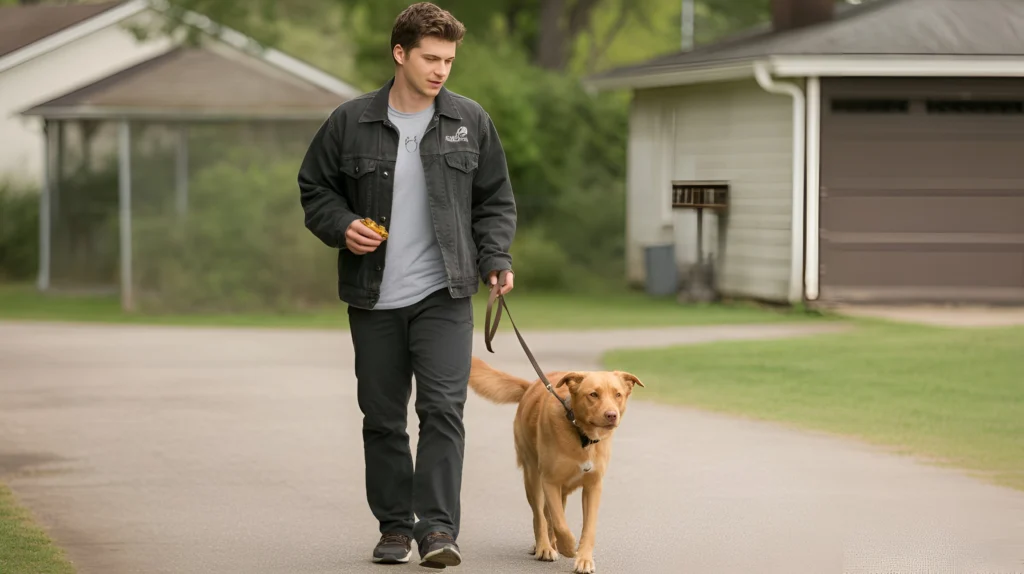
Motivation for Stubborn or Distracted Dogs
Not every dog learns the same way. Some are more “What’s next?” than “What now?”
Here’s how to keep even the most distracted pups motivated.
Tip 1: Level Up the Treats
If kibble doesn’t cut it, switch to real meat — small bits of chicken, turkey, or cheese.
When the reward excites your dog, focus follows naturally.
Tip 2: Add Movement
Dogs are hunters, not statues.
Turn heeling into a chase game — say “Heel,” walk a few steps, then sprint a couple more before rewarding.
Movement keeps energy positive.
Tip 3: Play the “Follow Me” Game
Without using the word “Heel,” start walking in random directions.
Reward whenever your dog chooses to follow you closely.
You’re building engagement and awareness — the foundation of the heel dog command.
Tip 4: Be More Fun Than the Distraction
When a dog pulls toward something — another dog, a smell, a toy — it’s not defiance; it’s interest.
Show them you are the most interesting thing on the walk.
Use your voice, energy, and joy.
Tip 5: Never Punish for Pulling
Corrections can make dogs anxious or defensive.
Instead, stop moving, reset calmly, and reward when they rejoin you.
Your calmness becomes their cue to focus again.
The Emotional Foundation: Calm Confidence
When you teach your dog to heel, you’re not just building control — you’re building calm.
Each successful step beside you teaches patience and focus.
Dogs crave structure; they relax when they know where they belong.
The heel dog command gives them that comfort:
“I know what to do. I know where to be. I’m safe here.”
Your voice becomes the rhythm, your pace the melody.
Before long, your walks stop being a test of wills and become a moving meditation — for both of you.
Advanced Challenges: Taking Heel Into the Real World
Once your dog can heel in your living room or backyard, it’s time to level up — because the real test happens out there, among squirrels, people, and endless smells.
This phase of the heel dog command isn’t about perfection. It’s about building reliability when life gets exciting.
Start with Mild Distractions
Head to a quiet street or park. Keep your leash short but relaxed.
Say your cue — “Heel” — in a calm, confident tone.
If your dog stays beside you even for a few steps, reward generously.
If they surge forward, stop immediately.
The lesson is simple: forward motion happens only when you’re together.
As I often tell my students, “Your feet are the pause button.”
Every time you stop, your dog learns that pulling ends the adventure.
Gradually Add Real-World Complexity
Once your dog handles calm areas, introduce new challenges:
- Passing another dog.
- Joggers running by.
- Children playing.
- Tempting smells near a bush or fence.
At first, your dog will falter. That’s normal.
Simply take a deep breath, reset, and reward small wins.
Patience beats power every time.
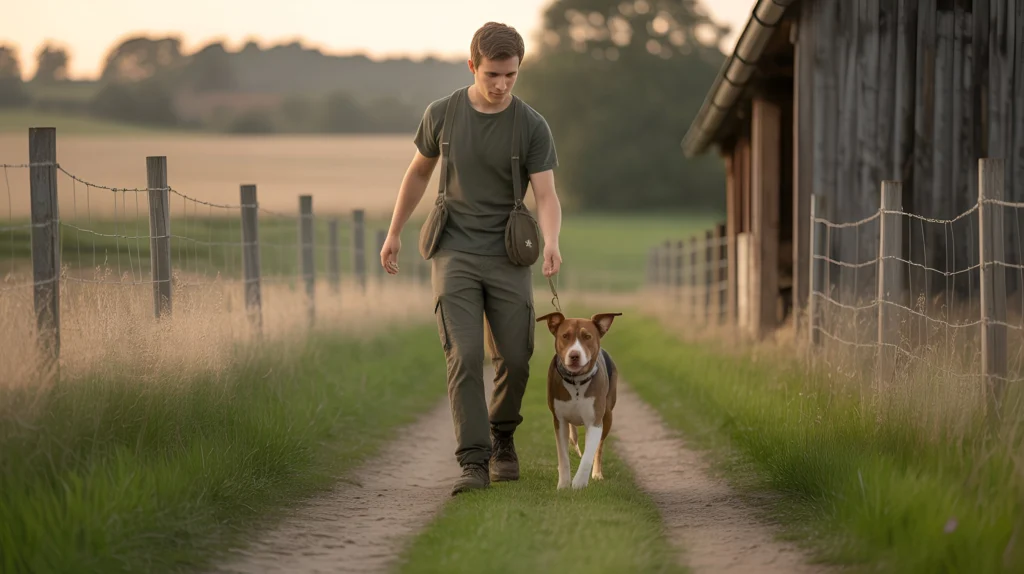
Advanced Variation: Off-Leash Heel
Off-leash heeling isn’t for everyone, but if your dog has solid focus and recall, it’s pure magic.
Start in a fenced area or large yard.
Walk slowly, cue “Heel,” and reward for alignment.
If your dog drifts away, stop and wait.
When they return on their own, praise like you just reunited after years apart.
You’re teaching independence with connection.
That’s the ultimate balance in advanced obedience.
Common Mistakes and How to Fix Them
Even good trainers slip up sometimes.
Let’s tackle the seven most common mistakes I see when owners teach the heel dog command — and how to fix them fast.
| Mistake | Why It Happens | How to Fix It |
| Using “Heel” too often | The cue loses meaning | Say it once, then reinforce with your movement |
| Leash corrections or jerks | Triggers tension or fear | Use stillness and praise instead of force |
| Inconsistent reward timing | Dog doesn’t connect behavior to reward | Reward immediately when your dog is at your side |
| No clear walking side | Confuses the dog | Pick left or right and stay consistent |
| Training too long | Leads to frustration and tuning out | Keep sessions under 10 minutes |
| Training only in quiet spaces | Dog never learns to generalize | Add gradual distractions once basics are solid |
| Ending every heel at the front door | Dog links heel with “walk is over” | Occasionally end with play or fetch to keep it positive |
Each correction refines communication and keeps the process joyful — not mechanical.
Remember: dogs don’t fail training; humans fail communication.
Keeping Motivation High
The best heeling dogs aren’t perfect — they’re enthusiastic.
You can’t bribe enthusiasm, but you can inspire it.
Here’s how:
- Be unpredictable. Mix in turns, stops, quick sprints. Keep your dog curious.
- Switch rewards often. Use food one day, toys the next, praise the third.
- Praise generously. Let your dog see how proud you are. Dogs live for that spark in your eyes.
- End every walk as a win. Even if progress was small, celebrate it.
With consistency, the heel dog command becomes second nature — not because your dog “has to,” but because they want to.
The Emotional Side of Heeling
Something special happens when a dog heels out of trust, not tension.
There’s a rhythm — the quiet padding of paws beside your step, the leash hanging loose like a ribbon of understanding.
You feel connected, centered, even peaceful.
That’s not obedience — that’s communication.
The heel dog command teaches your dog more than walking manners. It teaches emotional regulation:
to resist impulse, to stay calm under stimulation, and to read your mood through subtle cues.And it teaches you something too — patience, presence, and respect for how dogs learn.
Real Owner Questions (FAQ)
Q1. My dog walks nicely at home but pulls outside — why?
Outside is a carnival of smells and movement. Rebuild heel slowly outdoors, reward more frequently, and practice near distractions in short bursts.
Q2. Should I use a prong or choke collar for heeling?
No. Tools that cause pain break trust. Use a flat collar or front-clip harness — success comes from timing, not tension.
Q3. How long does it take to master the heel?
Most dogs show noticeable progress within 2–4 weeks of consistent, positive practice.
Q4. My dog heels perfectly until they see another dog. What can I do?
Create distance first. Call “Heel” before they fixate, reward heavily for attention, and slowly reduce distance over sessions.
Q5. Should I make my dog heel the entire walk?
No! Alternate between structured heeling and “free sniff” time.
Balance focus with freedom — both are part of a healthy, happy walk.
Q6. Can older dogs learn the heel dog command?
Absolutely. Older dogs often learn faster — they’re calmer and value praise more than chaos.
Emotional Benefits for You Both
As your dog learns to heel, something shifts between you.
Your frustration melts into confidence. Their anxiety transforms into trust.
Many owners tell me it’s the first time they feel like their dog “listens with their heart.”
That’s the real reward — the connection beyond the leash.
When you and your dog walk as one, you’re not just practicing obedience — you’re practicing partnership.
The heel dog command becomes your daily reminder: calm leadership creates calm dogs.
Final Thoughts and Key Takeaways
Heeling isn’t about control — it’s about communication, rhythm, and respect.
When done with patience and positivity, it changes everything about how you and your dog experience the world together.
Key Takeaways
- The heel dog command builds focus, respect, and emotional balance.
- Start simple, keep sessions short, and celebrate small wins.
- Avoid harsh corrections — consistency and praise are your true tools.
- Mix in distractions gradually to proof real-world reliability.
- Balance structure and freedom: heel for focus, release for joy.
Every walk can strengthen your bond — one step at a time.