

If you’ve ever walked your dog and watched them dive nose-first toward something they absolutely shouldn’t have — an old sandwich, a sharp chicken bone, or even a piece of trash — you already know why learning how to teach leave it is more than just a trick. It’s a lifesaver.
I’ll never forget the day this command saved my own dog, Bailey. We were strolling through our quiet Oregon neighborhood when she lunged toward a bush — and before I could react, she had a dead squirrel in her mouth. My stomach dropped. One “Leave it!” later, she froze, spat it out, and looked at me like, “Did I do good?” That single moment changed how I saw training forever.
The truth is, teaching your dog to leave it isn’t about control — it’s about communication, trust, and safety. Whether you’re working with a curious puppy or a stubborn adult dog, learning how to teach leave it will give you the confidence to handle any surprise life throws your way.
What “Leave It” Really Means
When we talk about how to teach leave it, we’re not just teaching a dog to ignore food or objects. We’re teaching impulse control — one of the most valuable life skills a dog can have.
‘Leave it’ teaches your dog to pause and think, as if saying, ‘I see that, but I know waiting will bring me something even better from you.’
This simple phrase can prevent a ton of problems, including:
- Accidental poisoning from street scraps
- Fights with other dogs
- Injuries from dangerous objects
- Overexcitement during walks
- Bad habits like stealing socks or chewing cords
More importantly, how to teach leave it builds patience, focus, and trust. It turns chaos into calm — and transforms your dog into a partner who listens because they want to, not because they’re forced to.
Why Learning How to Teach Leave It Matters So Much
Most owners start with the basics: “sit,” “stay,” “come.” Those are great. But if you ask me, the “leave it” dog command is the one that can actually save your dog’s life.
Imagine these moments:
- Your dog is about to eat a grape that rolled off the counter.
- They’re running toward traffic to grab a bouncing ball.
- They find a sharp bone or a wild animal in the park.
In each of these cases, “come” might be too late — but “leave it” gives you instant control. That’s the kind of command every responsible dog owner should have in their toolkit.
Beyond safety, learning how to teach leave it also makes daily life smoother. You stop fighting for control. You stop shouting “No!” every few minutes. Instead, you get a calm, confident response to a single cue — because your dog understands exactly what you mean.
The Psychology Behind “How to Teach Leave It”
Dogs are natural opportunists — they sniff, chew, and explore with their mouths. When you teach how to teach leave it, you’re asking your dog to override instincts that have been part of their DNA for thousands of years. That’s a big deal.
But here’s the good news: dogs are also brilliant learners. They love structure, consistency, and rewards. So when we use positive reinforcement to train “leave it,” we’re teaching them that making the right choice — resisting temptation — leads to something even better.
It’s just like teaching a toddler not to touch a hot stove. You don’t yell; you guide. You show them that waiting earns praise, attention, or something rewarding. That’s the exact mindset behind successful leave it training.
Setting the Stage for Success Before You Start Training
Before jumping into the actual steps of how to teach leave it, setting up the right environment will make everything easier — and faster.
Here’s what I always recommend to my clients before we start:
1. Choose a Quiet Environment
Start indoors, away from distractions. Your living room or kitchen is perfect for early sessions.
2. Pick High-Value Rewards
Use something your dog absolutely loves — chicken pieces, small cheese cubes, or high-quality training treats. The goal is to make your dog think, “Ignoring that temptation is totally worth it.”
3. Stay Calm and Confident
Your tone matters more than you think. “Leave it” should sound like guidance, not frustration. Keep your voice steady, calm, and positive.
4. Keep Sessions Short
Training isn’t about endurance — it’s about consistency. Five-minute sessions a few times a day will get you much further than one long, exhausting session.
Step-by-Step Guide: How to Teach Leave It Effectively
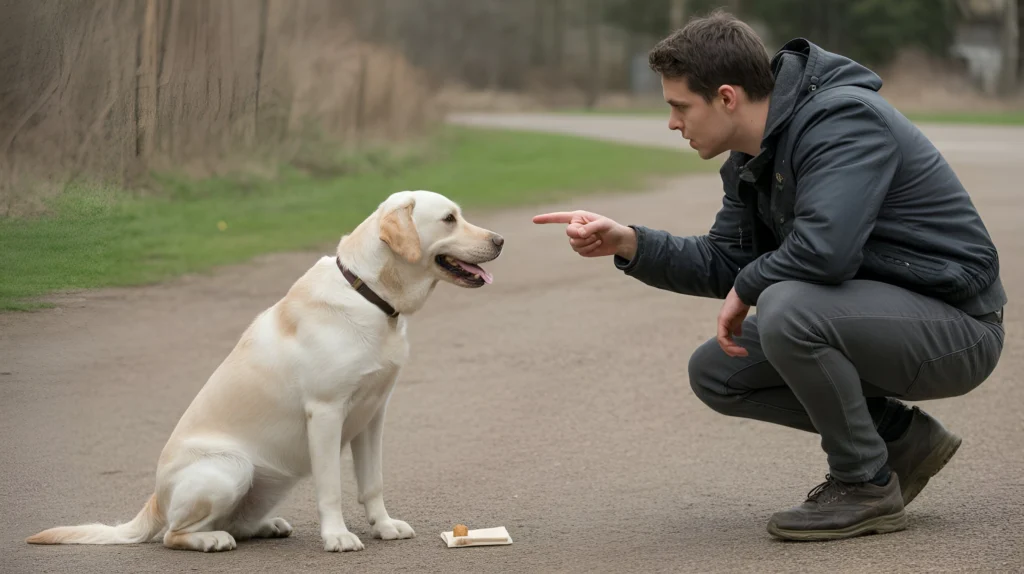
Every time I show new dog owners how to teach leave it, they’re amazed at how fast dogs catch on — once you make the lesson fun, fair, and clear. Remember, your dog isn’t being “defiant.” They just haven’t learned yet what leave it truly means. Let’s fix that, step by step.
Step 1: Start with the Closed Hand Technique
Grab a few treats and sit with your dog in a quiet spot.
- Hold one treat in your closed fist and let your dog sniff, lick, or paw at it.
- The moment they pull back or look away, say “Yes!” (or click if you’re using a clicker) and reward them with a different treat from your other hand.
This teaches your dog that ignoring temptation brings the reward — not taking it.
Pro tip: Be patient. For most dogs, this “aha” moment comes after a few tries.
Step 2: Introduce the Verbal Cue
Once your dog stops pestering your closed hand, start adding the words “Leave it.”
- Say “Leave it” just before offering your closed hand.
- Wait for that tiny pause of self-control.
- Reward immediately from the other hand.
By repeating this calmly and consistently, your dog learns that “leave it” predicts something positive — your praise or a better treat.
Step 3: Move to an Open Hand
Now it’s time to raise the stakes.
- Place a treat on your open palm.
- If your dog lunges for it, close your hand.
- When they back off, calmly mark with “Yes!” and reward with a treat from your other hand.
Repeat this several times until your dog automatically looks at you instead of the treat when hearing “Leave it.”
That moment of eye contact? That’s focus — and it’s gold.
Step 4: Practice with Floor Treats
Once your dog masters the hand exercise, drop a treat on the floor and cover it with your foot.
- Say “Leave it.”
- Wait for your dog to look away or sit back.
- Reward from your hand, not from the floor.
Never let your dog eat the “forbidden” item during training — it breaks the rule.
The lesson here is that listening to you is always more rewarding than giving in to temptation.
Step 5: Add Real-World Distractions
Dogs don’t live in training bubbles, so the next part of how to teach leave it involves real-life temptation.
Practice in your yard, then during walks, and eventually around distractions like toys, other dogs, or food on the ground.
Each time your dog successfully responds to “leave it”, reward big — treats, play, praise, whatever makes their tail wag hardest.
Motivation Tips for Stubborn or Easily Distracted Dogs

If your dog is the kind who looks at you like, “You’re not the boss of me,” don’t worry — I’ve met plenty like that. The key to how to teach leave it with stubborn or high-energy dogs is all about motivation and timing.
1. Discover Their “Currency”
Every dog has something they’ll always work for.
Some go crazy for bits of chicken or hot dogs; others prefer tug games or a favorite squeaky toy.
Find that one irresistible reward — it’s your secret weapon.
Use it only for leave it training, especially during tough situations like food on the ground or moving distractions.
2. Reward Generously, but Randomly
In the beginning, reward every correct response.
Once your dog understands the command, switch it up — sometimes a treat, sometimes praise or play.
This unpredictability keeps your dog excited to respond, just like a slot machine that might pay out at any moment.
3. Keep Sessions Short and Sweet
No dog — not even the smartest — can stay laser-focused for long.
End sessions while your dog’s still engaged, not tired or frustrated.
Five minutes of success beats twenty minutes of stress.
If your dog walks away mid-session, don’t force it. Take a break and start fresh later with high energy and positivity.
4. Don’t Train When You’re Irritated
Dogs can read us like open books.
If you’re upset, tired, or frustrated, your dog will mirror that energy.
Training while tense only makes things worse — for both of you.
When that happens, walk away. Breathe. Try again when you’re calm. Consistency and kindness always win.
5. Make “Leave It” a Daily Habit
Here’s my favorite part of how to teach leave it — turning it into a lifestyle, not just a trick.
Use it casually throughout your day, so it becomes second nature for your dog.
Try these easy mini-drills:
- Before mealtime: Ask for “leave it” before setting down the bowl.
- During walks: Drop something small, cue “leave it,” and reward focus.
- In playtime: Toss one toy, say “leave it,” and offer a different toy instead.
Every small success builds the foundation for rock-solid obedience.
Advanced Challenges for Experienced Owners
Once your dog understands the basics of how to teach leave it, you can start testing their impulse control in more complex, real-life situations. These challenges strengthen reliability, deepen trust, and make your dog bulletproof to distractions.
1. Multi-Item Leave It
Scatter a handful of treats or small toys across the floor.
Walk your dog on leash through the area, giving “Leave it” once at the start.
The goal? Your dog should ignore every item — not just the first.
When you’ve passed the last object successfully, praise and reward big.
Pro tip: This exercise is great for dogs who tend to “shop around” during walks or at the park.
2. Moving Temptations
Dogs are naturally drawn to motion — balls, toys, even blowing leaves.
To strengthen control, roll a ball or drop a bouncing toy while saying “Leave it.”
If your dog stays calm, reward immediately with a treat or play session.
This builds deep impulse control — the kind you’ll appreciate when a squirrel runs across your path during a morning walk.
3. Leave It from a Distance
Ask your dog to “Leave it” from across the room or a few feet away during a walk.
If they pause and look back at you, that’s true understanding.
Reward generously — they just made a decision based on trust, not impulse.
Distance work transforms “leave it” from a simple cue into a powerful communication tool between you and your dog.
4. Leave It with Distractions
Bring in a helper — a friend who can drop food, move toys, or even walk another dog nearby.
Cue “Leave it” while keeping your tone calm and confident.
When your dog resists temptation, celebrate!
This mirrors real-life chaos — picnics, parks, busy sidewalks — and proves your dog can focus no matter what’s happening.
When to Use “Leave It” — and When Not To
Timing is everything in training. How to teach leave it isn’t just about giving the cue — it’s about knowing when to give it.
Use “Leave It” When:
- Your dog is approaching something they haven’t touched yet
- You spot potential danger (trash, glass, food, animals, etc.)
- You want to redirect focus before a problem starts
Avoid Using It When:
- Your dog already has the item in their mouth (use “Drop it” instead)
- You’re angry or shouting — your tone changes the meaning
- You overuse it for everything (it should always mean “ignore completely”)
Consistency is what keeps this command powerful.
If “Leave it” always means “ignore that thing,” your dog will respond instantly, no matter the situation.
The Emotional Side of “Leave It”: Building Trust and Communication
What I love most about how to teach leave it isn’t just the obedience — it’s the connection.
When your dog learns to pause and look at you instead of lunging for something, that’s trust in action.
They’re saying, “I believe you’ll take care of it.”
And that’s the foundation of every strong human-dog relationship.
You’ll notice it in small moments:
- Your dog checking in with you before crossing the street
- A calm pause when another dog barks nearby
- A subtle glance instead of a tug when temptation strikes
Each of these is a sign of mutual understanding — not dominance, not control, but communication.
Common Questions About “Leave It” (FAQ)
Let’s tackle some of the most frequent questions I hear from dog owners learning how to teach leave it for the first time.
1. How long does it take to teach “leave it”?
Most dogs understand the basics within a week or two if you’re consistent. But real-world reliability — ignoring food, distractions, or moving objects — can take a month or more. Patience pays off here.
2. Can puppies learn “leave it”?
Absolutely. Puppies are like sponges — start with soft treats and short sessions. Just a few seconds of impulse control each day builds habits that last a lifetime.
3. My dog freezes or looks confused when I say “leave it.” What should I do?
That’s progress! It means your dog’s thinking. Mark the pause with “Yes!” and reward. The more they learn that calm thinking earns rewards, the quicker they’ll master it.
4. Is “leave it” the same as saying “no”?
Not exactly. The word ‘No’ tells your dog to stop what they’re doing, while ‘Leave it’ encourages them to look away and refocus on you.
‘Leave it’ fosters cooperation, not conflict — it’s about helping your dog make better choices, not just giving commands.
5. Can I teach “leave it” to an older or rescue dog?
Definitely. I’ve trained plenty of senior rescues to master this command. Older dogs may need extra patience, but they often have stronger focus and a deeper desire to please.
6. What if my dog grabs things off the ground constantly?
You’re dealing with a “floor surfer.”
Set up controlled “leave it” drills using dropped treats or toys. Every time your dog resists temptation, reward generously. Over time, they’ll stop scanning the floor and start looking at you instead.
Key Takeaways Every Owner Should Remember
Here’s a quick recap of the most important points about how to teach leave it:
- Meaning: “Leave it” means ignore that object completely and look to me for direction.
- Purpose: Builds safety, control, and mutual trust.
- Method: Start simple (closed hand), then progress to harder challenges (floor, distance, motion).
- Timing: Reward immediately when your dog disengages.
- Consistency: Keep your tone calm and your message clear.
- Mindset: Training isn’t about control — it’s about teamwork.
Why “Leave It” Is More Than Just a Command
When I think about how to teach leave it, I remember Bailey — my golden retriever.
She used to dive nose-first into every bush, every bag, every dropped sandwich. But after consistent practice, she’d pause, glance up, and wait for my cue.
That single look of trust changed everything.
Because “leave it” isn’t just about ignoring food or toys — it’s about your dog saying, “I trust you to make the call.”

Final Thoughts: Training with Heart and Consistency
If there’s one truth I’ve learned after decades of working with dogs, it’s this — training is never about domination; it’s about communication.
How to teach leave it gives your dog the tools to make smart, safe decisions — and gives you peace of mind knowing they’ll listen when it matters most.
You’ll walk together confidently, communicate clearly, and build a deeper bond rooted in trust, not tension.So grab your treats, find a quiet spot, and start today.
Because one calm “Leave it” might not just prevent trouble — it might save your dog’s life.