
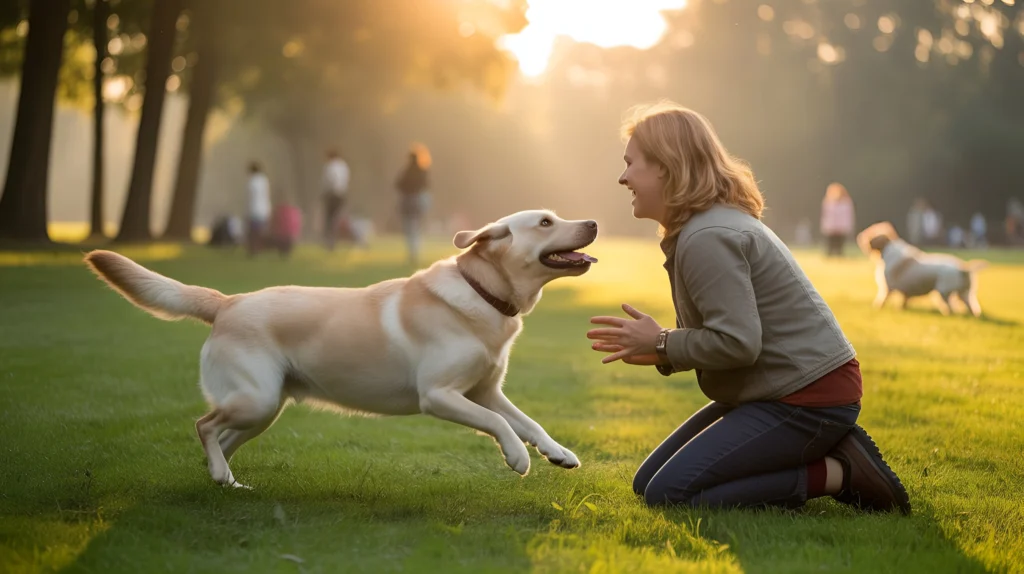
Teach your dog to come with love, confidence, and clear communication — the foundation of a lifelong bond.
The Day My Dog Ignored Me at the Park
It was one of those golden Saturday mornings — sun shining through the trees, kids tossing Frisbees, and the park alive with laughter.
My Labrador, Jake, was full of energy, tail wagging, nose to the ground, following every scent like it was a story.
Then it happened.
I called, “Jake, come!”
He looked straight at me, ears perked — and then sprinted the other way.
He wasn’t being bad. He was being a dog — curious, free, lost in the joy of the moment.
But as he darted toward the pond, my heart stopped. In that instant, I realized something big:
The come command for dogs isn’t just obedience — it’s a lifeline.
That day changed how I trained forever. Because when your dog chooses to return to you — even when the world around is bursting with distractions — that’s not obedience.
That’s trust.
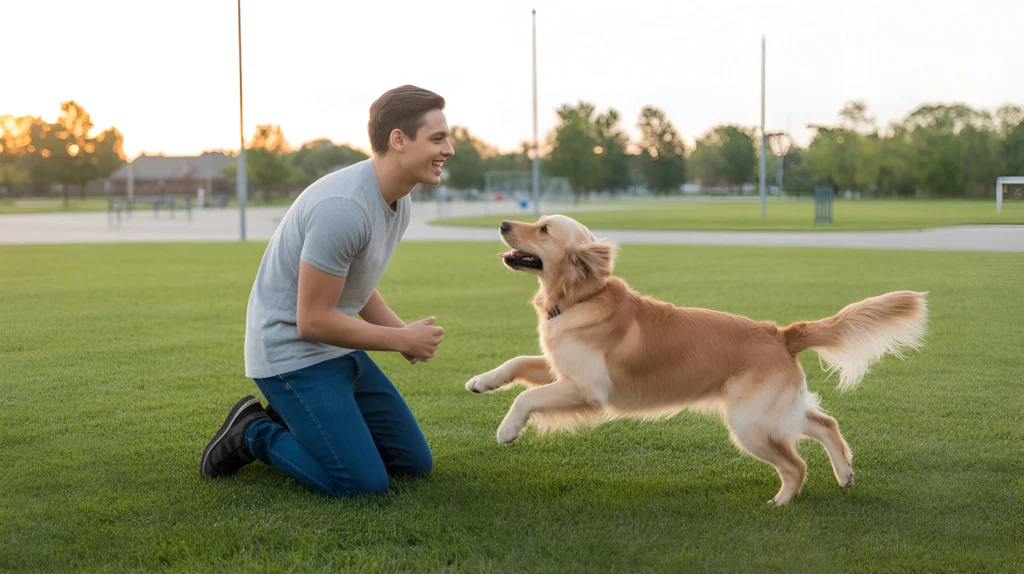
What the Come Command Really Means
To us, the come command for dogs sounds simple — call the name, dog returns.
But to your dog, “come” is not a command; it’s an emotion. It means:
- “You are my safe place.”
- “Good things happen when I listen to you.”
- “We’re a team.”
Every time your dog comes when called, they are saying, “I trust you.”
That’s why recall training isn’t about dominance — it’s about communication.
When owners ask me how to get their dogs to listen better, I tell them, “Start by listening yourself.”
If you call your dog in a cheerful, confident tone, your energy invites them.
If you sound tense or angry, even the most loyal dog will hesitate.
The come command for dogs is a two-way street. You’re not just teaching your dog to obey; you’re showing them why it’s worth returning.
Why It Matters
Every trainer has a story that proves how powerful a strong recall can be.
I remember working with a family who adopted a young beagle named Cooper.
He was curious, stubborn, and lightning-fast. During a walk one day, Cooper spotted a squirrel and bolted toward the road.
But his owner shouted the recall word — firm yet joyful — and Cooper stopped mid-run and turned back.
That moment saved his life.
That’s why the come command for dogs isn’t optional; it’s essential.
It builds safety, freedom, and connection all at once.
Why Recall Is More Than Obedience
- Safety: Protects your dog from traffic, wildlife, and danger.
- Freedom: Lets your dog explore more of the world while staying safe.
- Bonding: Reinforces your relationship every time your dog chooses to come.
When your dog knows that coming back leads to joy, praise, and love, recall training becomes one of the most beautiful parts of your relationship.
Step-by-Step Guide: Teaching the Come Command for Dogs
Teaching recall doesn’t have to be intimidating. It’s all about consistency, patience, and genuine enthusiasm.
Here’s how to do it — one friendly, realistic step at a time.
Step 1: Choose Your Cue
Use “come” or “here.” It doesn’t matter which, as long as you stick with it.
Always say it once, in a cheerful, inviting tone.
Step 2: Start Indoors
Begin in a quiet environment.
Say your dog’s name first, then your cue:
“Riley, come!”
If your dog even takes one step toward you, reward immediately.
You’re teaching that this word always means something good.
Step 3: Reward Like You Mean It
The first few sessions set the emotional tone for the entire training journey.
Use high-value treats, soft praise, or a quick play session.
Make the come command for dogs the best part of your dog’s day.
Step 4: Keep Sessions Short
Train for only 2–5 minutes at a time.
Dogs learn best when they end sessions excited, not tired or frustrated.
Leave them wanting more — that’s the secret to progress.
Step 5: Add Distance Gradually
Take a few steps back each time you practice.
If your dog succeeds, increase the space between you.
If they get distracted, go back to an easier level.
Progress isn’t a straight line — it’s a dance.
Step 6: Use a Long Training Line
Once your dog gets it indoors, take the training outside using a long leash (20–30 feet).
Let them wander, then call them once.
If they hesitate, gently guide them in and reward generously when they arrive.Never scold for hesitation — always praise for the return.
This is how the come command for dogs grows stronger: through joy, not fear.
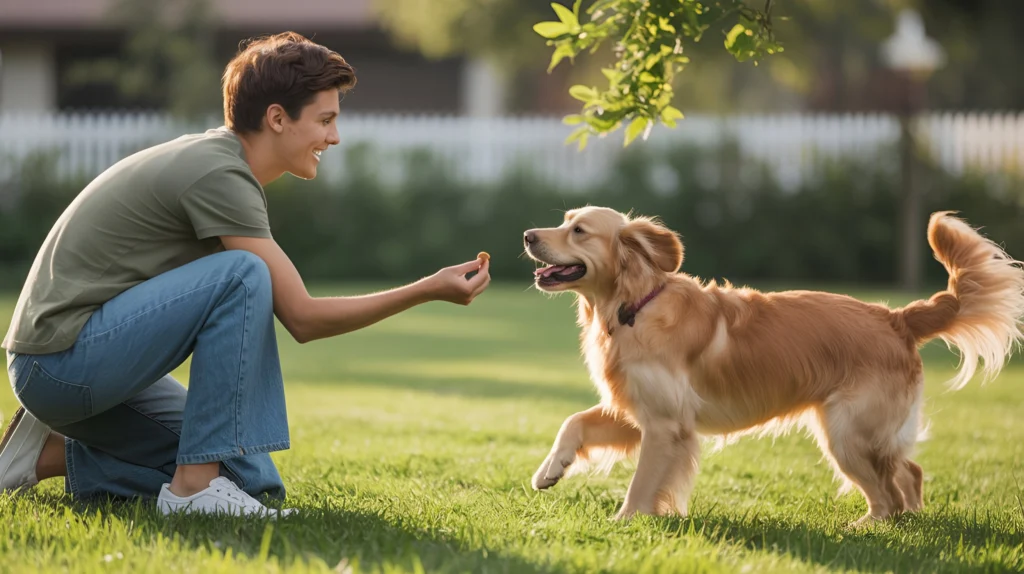
Step 7: Random Recalls
Call your dog at unexpected times — while watching TV, in the kitchen, during play.
Reward, then say, “Go play!”
This teaches that “come” doesn’t mean the fun is over — it means more good things are coming.
Step 8: Build Emotion Into Every Session
The more genuine excitement you show, the faster your dog will learn.
They respond to tone, body language, and joy more than commands.
Smile when you say the word — your dog will feel the warmth behind it.
Motivation Tips for Stubborn Dogs
Even the most loving dogs sometimes decide that a smell, a squirrel, or another dog is more interesting than you.
Don’t take it personally — motivation is the bridge between obedience and excitement.
Tip 1: Use Better Rewards
If your dog ignores you, your reward isn’t strong enough.
Swap dry biscuits for small pieces of chicken or cheese.
The more valuable the reward, the faster your dog will come.
Tip 2: Make Yourself Fun
Run backward while calling your dog. Clap, laugh, or even act silly.
When you move, you become the most interesting thing in the park.
Tip 3: Play Hide-and-Seek
Hide behind a tree or door, call your dog once, and let them “find” you.
When they do, act like they just solved a mystery.
That excitement locks in the come command for dogs faster than any treat.
Tip 4: Don’t Call to Punish
Never call your dog to end playtime, take a bath, or get scolded.
They’ll associate “come” with something negative — and next time, they’ll hesitate.
Tip 5: End on Success
Always finish training when your dog comes quickly and happily.
Leave them proud of themselves — it builds long-term motivation.
Emotional Foundation: Building Trust Before Training
You can’t teach recall if your dog doesn’t feel safe coming back to you.
Trust comes first, obedience second.
Dogs who are yelled at or corrected harshly when they return will stop trusting the process.
Instead, make every recall feel safe.
Feed treats by hand, speak softly, kneel when calling them, and always greet them with love.
Over time, the come command for dogs stops being a cue — it becomes an instinct.
Your dog learns that no matter where they are or what happens, coming back to you is always the right choice.
Real-World Mastery and Emotional Connection
Now that your dog understands the basics of recall, it’s time to bring that training into the real world — where distractions test focus and connection becomes the true anchor.
This is where the come command for dogs graduates from classroom to life.
From the Backyard to the Big World
Your home and yard are controlled spaces. But the park, the trail, or the beach? Those are symphonies of scent, sound, and temptation.
To make the come command for dogs reliable everywhere, you’ll need to proof the behavior step by step.
Step 1: Mild Distractions
Begin in a quiet field or driveway. Call once, warmly.
If your dog turns toward you instead of a passing jogger or bird, celebrate like crazy. That decision is gold.
Step 2: Add Real-World Movement
Toss a toy or have a friend stroll by while you call.
Your cheerful energy tells your dog: you’re still the best thing here.
Step 3: Increase Distance
Lengthen the leash to twenty or thirty feet.
Each successful recall under mild distraction hardens the habit.
Distance adds challenge — so double the reward when they nail it.
Step 4: Controlled Off-Leash Moments
When you’ve logged hundreds of wins on the long line, test recall in a fenced area.
One cue, one joyful sprint back — that’s when you’ll feel the magic.
When Recall Falters
Every dog has off days. A new scent, a sudden noise, or your own stressed tone can make them hesitate.
Why it happens:
- Too many distractions too soon.
- Rewards lost excitement.
- Cue repeated too often.
- Tension crept into your voice.
Quick resets:
- Step back to easier sessions for a few days.
- Switch to higher-value rewards.
- Keep sessions short and upbeat.
- End on success, always.
Failure isn’t rebellion; it’s communication. Adjust, don’t scold.
Turning Training into Play
Games transform learning into instinct. They keep the come command for dogs sharp and joyful.
The Ping-Pong Game
Stand apart with a partner and take turns calling your dog.
Reward every run. They’ll fly between you, learning speed and excitement.
Hide and Seek
Hide behind a tree or door, call once, and wait.
The search itself strengthens focus — and when they find you, celebrate like you won the lottery.
Freedom Recall
Call, reward, then release with “Go play!”
Your dog learns that coming to you doesn’t always end the fun — sometimes it restarts it.
Emergency Recall Word
Teach a unique cue (like “Now!”).
Use it rarely and pair it with the best reward imaginable.
Reserve it for moments when safety depends on it.
Play keeps learning alive long after formal lessons end.
Common Mistakes — and Simple Fixes
| Mistake | Why It Happens | How to Fix It |
| Repeating the cue | Teaches the dog to wait for extra calls | Say it once, then help them succeed |
| Calling with frustration | Sounds like trouble | Keep tone bright and encouraging |
| Ending fun every time | Dog links “come” with loss of freedom | Reward, then release again |
| Punishing after return | Destroys trust | Always praise the decision to come |
| Weak rewards | Distractions win | Upgrade treats or play |
| Inconsistent cues | Confuses your dog | Use one clear phrase every time |
Perfection isn’t the goal; consistency is. Each corrected habit strengthens the bond behind the come command for dogs.
The Emotional Heart of Recall
When your dog races toward you, ears flying and tail sweeping the air, that’s not obedience — that’s love in motion.
The come command for dogs becomes more than safety; it’s an emotional handshake between you and your companion.
You’re no longer just a trainer — you’re a source of peace and excitement rolled into one.I’ll never forget Baxter, a timid rescue who once refused to come near anyone.
After weeks of patient games, he finally bolted across the field straight into my arms.
That wasn’t training — it was trust reborn.
Keeping Recall Strong for Life
A recall is like a muscle — use it or lose it.
To keep it polished:
- Practice a few recalls each week.
- Use the cue before meals or walks.
- Praise spontaneous check-ins.
- Refresh the “emergency” word monthly with an amazing reward.
These small habits keep the come command for dogs strong for years.
Real Owner Questions
Q1 – Can senior dogs learn recall?
Yes. Patience and gentle pacing work wonders; older dogs love structure and kindness.
Q2 – Why does my dog obey indoors but ignore me outside?
Outdoor distractions overwhelm focus. Go back to basics outside with higher-value treats.
Q3 – Is a whistle better than my voice?
A whistle stays consistent at distance; your voice adds emotion. Use whichever your dog responds to best.
Q4 – What if my dog runs away for fun?
Turn it into a game — run the opposite direction. Curiosity and playfulness pull them back faster than shouting.
Q5 – How long until recall is solid?
With steady practice, most dogs become reliable in 6–10 weeks; emotional trust keeps it lasting.
Q6 – Should I ever punish for ignoring me?
Never. Punishment poisons trust. Re-establish motivation instead.
Key Takeaways
- The come command for dogs builds safety, freedom, and connection.
- Keep every recall positive — reward first, correct gently later.
- Use variety and play to prevent boredom.
- Add distractions gradually for real-world reliability.
- Refresh recall habits weekly.
- Remember: recall isn’t about control — it’s about trust in motion.