
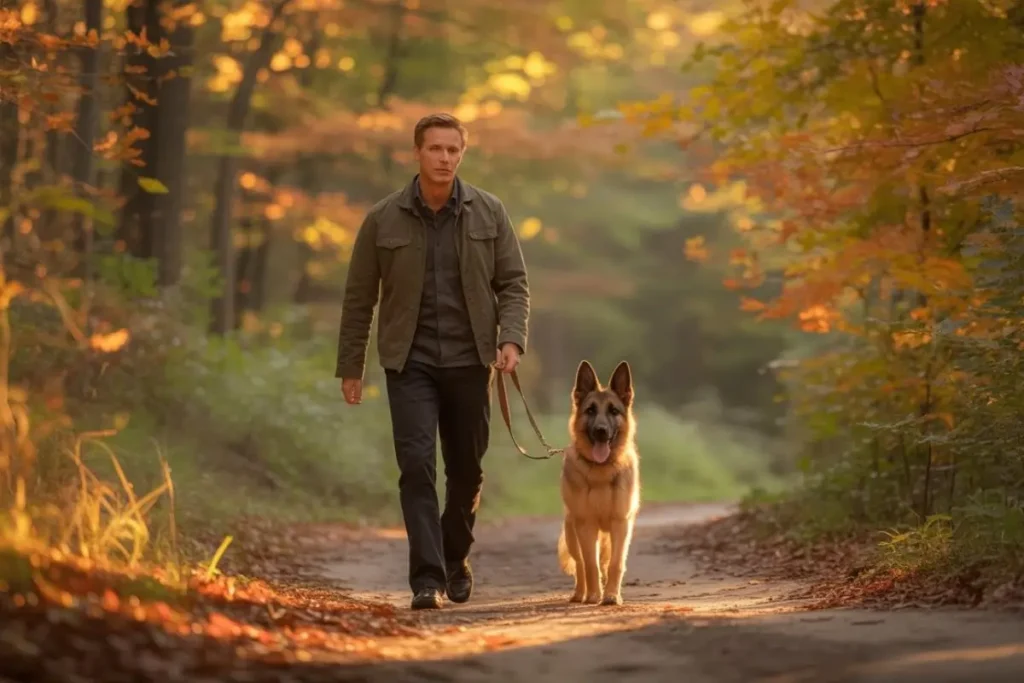
There’s a quiet art to walking your dog.
It’s not just about holding a leash — it’s about communication, patience, and balance.
I still remember one fall morning with my German Shepherd, Duke. He was young, full of life, and as soon as we stepped outside, the leash turned into a tug-of-war rope. He wanted to chase every squirrel, greet every dog, and test every inch of my patience. That was the day I realized something: the dog training leash isn’t a tool of control — it’s a bridge of understanding.
What a Dog Training Leash Really Means
At its heart, dog training leash work isn’t about restraint; it’s about connection.
Every gentle correction, every bit of slack, every cue you give through that leash tells your dog something about you — whether you’re calm, anxious, confident, or distracted.
The leash becomes an extension of your communication, like the subtle reins of a skilled horse rider.
A good leash session teaches your dog focus, boundaries, and emotional regulation.
It’s not just about stopping your dog from pulling — it’s about helping them think before reacting, even when faced with distractions like cars, joggers, or other animals.
Think of it this way:
The dog training leash is your language of leadership — one spoken without words, built entirely on timing, consistency, and gentle feedback.
Why Dog Training Leash Work Matters More Than You Think
A well-trained dog on a leash isn’t just pleasant — it’s safe, respectful, and emotionally balanced.
Many behavioral issues I’ve seen in dogs — jumping, lunging, barking, even anxiety — all trace back to poor leash habits.
When your dog learns to walk calmly beside you, they’re learning self-control in every sense of the word.
Here’s what proper leash training truly builds:
- Emotional Regulation: The dog learns patience and control instead of impulsive excitement.
- Trust: Your dog begins to see you as the calm, steady leader who guides, not restrains.
- Safety: A dog who listens on leash is less likely to run into danger or startle others.
- Confidence: A structured dog training leash routine provides mental stimulation and purpose.
Most people underestimate how much a leash impacts their bond with their dog. When you use it right, it becomes a source of communication — a way to synchronize your emotions with your dog’s focus.I’ve watched nervous puppies transform into confident companions simply by mastering leash walking.
And I’ve seen frustrated owners rediscover joy in walks once they understood that the leash isn’t a punishment — it’s a pathway to harmony.
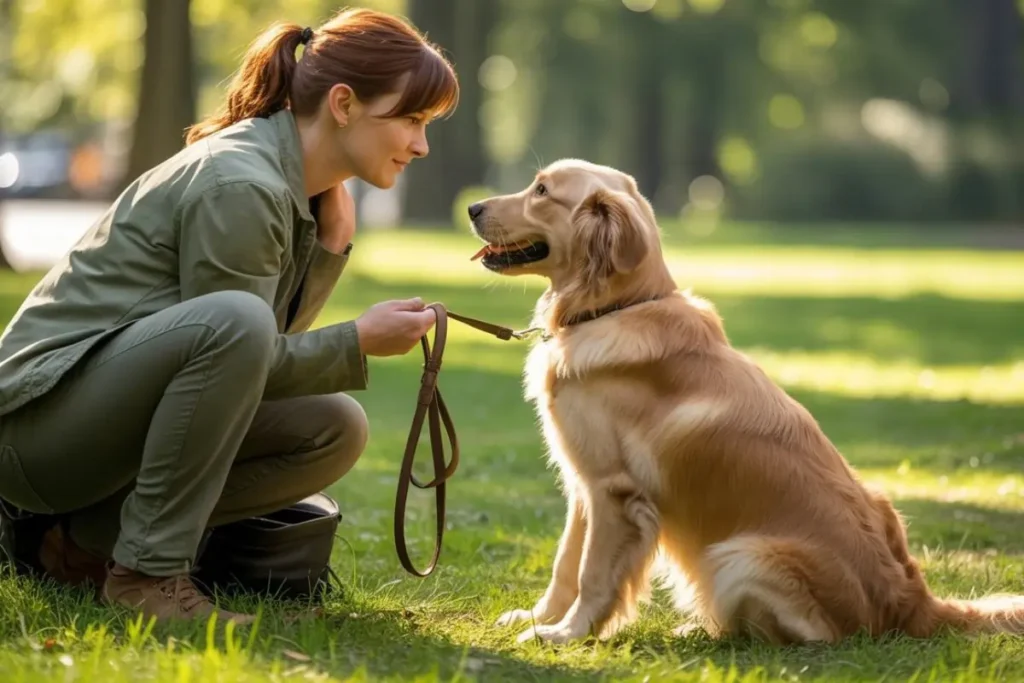
The Psychology Behind the Leash
Every dog has an inner rhythm — some are naturally intense, others more mellow.
The dog training leash helps you tune into that rhythm.
When you move with calm energy, your dog mirrors it. When you tense up, your dog senses it instantly.
A leash, in essence, reflects your state of mind.
If your dog pulls, ask yourself: am I walking with confidence or reacting to their energy?
Most leash issues are emotional before they are mechanical.
A dog that feels guided doesn’t pull; a dog that feels chaos at the other end of the leash will.
Training with the right leash approach teaches two living beings — you and your dog — to move as one.
It’s a subtle dance where leadership replaces force, and connection replaces frustration.
Building the Foundation: What You’ll Need
Before we dive into the actual dog training leash methods, here’s what to have ready:
- The Right Leash Length: Start with a 6-foot leash — long enough for freedom, short enough for control.
- A Comfortable Collar or Harness: Avoid painful corrections; comfort builds confidence.
- Calm Environment: Begin indoors or in a quiet area free from distractions.
- Positive Reinforcement Tools: Treats, toys, and lots of verbal praise.
Your leash is not a whip — it’s a whisper.
Used correctly, it becomes your dog’s guide to emotional balance, structure, and freedom.
Step-by-Step Guide to Mastering the Dog Training Leash
Training your dog to walk calmly on a leash isn’t magic — it’s method, patience, and rhythm. The secret lies not in force but in consistency and timing. Below is the same framework I’ve taught hundreds of families across the U.S., from Boston to San Diego, to turn leash chaos into calm, focused teamwork.
Step 1: Establish Calm Before Movement
Before you even clip the leash on, take a breath.
Dogs mirror energy — if you’re rushed, they’ll be wired; if you’re calm, they’ll settle faster.
Ask your dog to sit or stay before you attach the leash. Wait until they’re relaxed. Only then do you move toward the door.
This step sets the emotional tone. The leash should represent calm structure, not excitement.
If your dog starts bouncing or barking when they see the leash, pause. Don’t scold — just wait. When they relax, clip it on quietly.
That moment of silence before walking out is the first victory in your dog training leash journey.
Step 2: The “First Five Steps” Rule
The biggest mistake most owners make?
They start walking fast.
Instead, I teach what I call “The First Five Steps Rule.”
Those first five steps decide the tone of your walk.
- Keep the leash short but relaxed.
- Walk slowly and deliberately.
- If your dog surges forward, stop immediately.
- Wait until they look back or release pressure on the leash.
- Praise softly — “good easy” — then move again.
This small exercise builds the foundation for a dog that watches your pace and respects your space.
Over time, your dog learns that freedom only comes when they stay calm and focused.
Step 3: Reward Attention, Not Position
A common misconception is that leash training is about keeping the dog at your side at all times.
It’s not about position — it’s about attention.
Whenever your dog glances up at you, even for a split second, reward that behavior.
That eye contact means they’re checking in, reading your movement, and syncing their focus with yours.
This is the true heart of dog training leash work — creating connection through mindfulness.
Pro tip: Try this exercise — each time your dog looks at you, quietly say “yes” and offer a small treat or praise. It teaches your dog that focus equals reward.
Step 4: Redirect, Don’t Yank
If your dog lunges or pulls, resist the instinct to yank the leash.
Pulling back just creates a tug-of-war dynamic — and dogs are strong enough to win it.
Instead, gently redirect.
Turn in the opposite direction and encourage your dog to follow.
When they catch up calmly, reward and continue.
This method teaches your dog that the leash isn’t a restriction; it’s guidance.
Over time, they’ll begin to mirror your changes naturally — following your lead rather than resisting it.
Step 5: Practice “Stop and Reset”
Leash training takes repetition, and one of the most powerful tools you have is the stop-and-reset method.
If your dog starts pulling or losing focus, stop walking completely. Don’t talk or tug — just freeze.
When your dog pauses and turns toward you, reward with calm praise and move forward again.
This simple rhythm — pull, stop, refocus, move — conditions your dog to understand that calmness equals progress.
Motivation Tips for Stubborn Dogs
Some dogs seem born with a “go-go-go” attitude.
If you’ve got a high-energy breed — think Labrador, Border Collie, or Husky — leash manners can take more patience.
Here’s how to handle stubborn cases with grace and humor:
- Short Sessions: Keep early walks under 10 minutes. End on success, not frustration.
- Change Direction Often: Keeps your dog mentally alert and focused on you.
- Reward Small Wins: Even a single calm step deserves praise in early sessions.
- Use Natural Rewards: Allow sniffing breaks as a “thank you” for staying calm.
- Stay Playful: Turn training into a game. Use your voice, laughter, and energy to keep your dog engaged.
Remember: dogs don’t resist training — they resist confusion.
Clarity and consistency are your best tools for transforming a distracted pup into a focused partner.
Understanding Energy Transfer
One of the most overlooked truths in dog training leash work is that your emotional energy transfers down the leash like electricity.
If you’re frustrated, your dog feels it instantly.
That’s why I tell every owner I mentor: “Don’t train in a hurry.”
Take a deep breath, center yourself, and imagine sending calm confidence down that leash.
Your dog will feel it — and respond in kind.
It’s one of those almost magical aspects of the human-canine bond that no gadget or technique can replace.
Advanced Challenges: Real-World Proofing and Leash Confidence
Once your dog masters the basics of calm leash walking at home or in your quiet neighborhood, it’s time to take things to the next level — real-world leash confidence.
Every dog faces distractions differently. What tests one dog’s focus might not even faze another.
Here’s how to level up your dog training leash practice safely and effectively:
1. Add Controlled Distractions
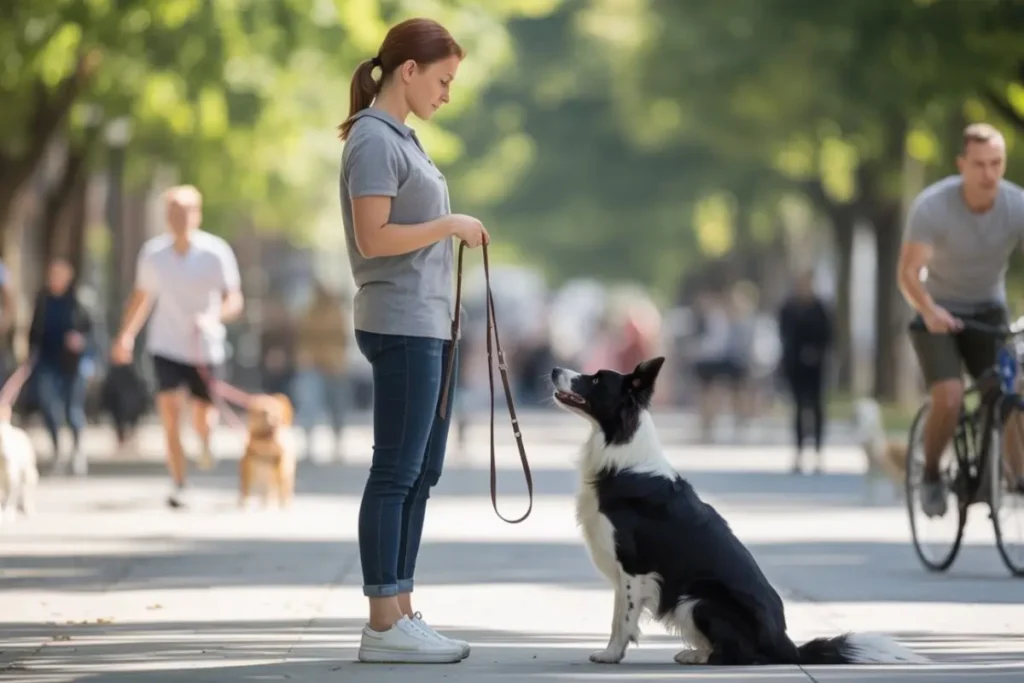
Start introducing mild distractions — maybe another person walking by or a parked bicycle. Reward your dog for staying focused on you instead of reacting.
If your dog breaks focus, gently redirect instead of scolding. The goal isn’t perfection — it’s progress.
2. Use Long-Line Leash Practice
A 20- to 30-foot long line gives your dog a sense of freedom while you maintain subtle control.
This helps teach off-leash readiness later while strengthening recall and focus.
3. Train in New Environments
Dogs don’t generalize well. Just because your dog walks perfectly in your backyard doesn’t mean they’ll behave the same at the park or downtown.
Expose them to new surfaces, sounds, and smells. Confidence builds when training remains consistent in every setting.
4. Practice “Settle and Observe”
Not every training walk should be about movement.
Sometimes, the best dog training leash session involves sitting quietly together — teaching your dog that calmness itself is rewarding.
Try sitting on a park bench, letting your dog rest by your side, and simply breathe together.
Common Mistakes & Fixes
Even well-intentioned owners make mistakes when it comes to leash work. Here are seven of the most common — and how to fix them with ease:
| Mistake | What Happens | Fix |
| Pulling back on the leash | Creates tension and resistance | Stop, breathe, and redirect calmly |
| Using the leash as punishment | Builds fear and confusion | Use positive cues and calm corrections |
| Walking too long early on | Leads to frustration | Keep sessions short and positive |
| Ignoring energy levels | Overstimulation = chaos | Exercise before training for better focus |
| Being inconsistent | Confuses your dog | Repeat the same rules daily |
| Talking too much | Overloads your dog’s focus | Use short cues and calm praise |
| Skipping relaxation time | Dog stays alert too long | Teach “settle” as part of leash routine |
Small corrections in your daily approach can transform leash time from a battle into a bonding ritual.
Emotional Benefits & Communication
If you’ve ever watched a perfectly balanced leash walk, you’ve witnessed something deeply emotional — trust in motion.
That’s what a true dog training leash experience creates: not obedience by force, but cooperation born from mutual respect.
Over the years, I’ve seen dogs change lives just through this simple tool.
A veteran with PTSD finding peace in the rhythm of walking his service dog.
A child gaining confidence by leading the family dog around the block without fear.
A senior rediscovering independence through structured daily walks.
Every leash holds a story — one about connection, communication, and quiet leadership.

FAQ
1. How long does it take to leash train a dog?
It depends on your dog’s age, temperament, and consistency. Most dogs show progress within two weeks of daily 10–15 minute sessions.
2. What’s the best leash length for beginners?
A standard 6-foot dog training leash gives you both control and flexibility. Avoid retractable leashes until your dog has mastered basic manners.
3. Should I use a harness or collar?
For most dogs, a front-clip harness is safest and most effective. It prevents pulling and allows smoother communication.
4. How do I stop my dog from lunging at other dogs?
Increase distance and use calm redirection. Reward calm focus before your dog reacts — prevention beats correction.
5. Can older dogs still learn leash manners?
Absolutely. Senior dogs may take longer, but patience and consistency work wonders. Age never limits learning.
6. What if my dog is anxious about the leash itself?
Desensitize slowly: let your dog sniff the leash, reward calmness, and gradually attach it for short sessions indoors.
Final Thoughts & Key Takeaways
Leash training isn’t just about teaching your dog to walk politely.
It’s about building communication, emotional regulation, and trust — all through one simple tool.
The dog training leash teaches both ends of the line:
Your dog learns patience and focus, while you learn empathy and timing.
And when those two lessons meet, every walk becomes a moment of connection — not correction.
So next time you reach for that leash, remember:
You’re not just taking your dog for a walk — you’re taking your relationship to the next level.
Summary Highlights:
- Start every session calm — emotion drives success.
- Reward focus, not position.
- Redirect, never yank.
- Keep sessions short and consistent.
- Treat leash walking as a conversation, not a command.
When used right, the dog training leash becomes more than a piece of equipment — it’s your bridge to a happier, calmer, more connected life with your dog.